Trimming trees near your house matters more than any other tree job, because the trees closest to your home are the ones most likely to cause damage in a storm and the ones most likely to hurt someone when a trimming job goes wrong. This post covers branches over the roof and gutters, limbs rubbing the siding, branches that hang into the neighbor's yard, and the jobs a homeowner should leave alone, starting with anything near a power line.
Key Points
- Keep branches off the roof, siding and chimney, and shorten heavy limbs that sit over bedrooms and living areas.
- Cut back to a side branch or to the trunk. Never leave stubs at the eaves or along the property line.
- Never trim near a power line. SMUD or PG&E handles clearance around its lines, depending on who serves your address.
- You can usually trim what hangs over your side, but talk to your neighbor first and don't harm the tree.
- A ladder plus a saw is the classic setup for a serious injury. Limbs over the roof are a job for a crew with rigging.
Branches Over the Roof and Gutters
A limb that rests on the roof does more than drop leaves. Every breeze drags it across the shingles and wears away the surface. Leaves and needles pack into gutters and valleys, hold moisture against the roof through our wet winters, and send rainwater over the edge. Branches that touch the roofline also give rats and squirrels an easy path into the attic.
The bigger worry is winter storms. When the valley's clay soils are soaked and the wind picks up, a heavy limb over a bedroom is a real hazard. The goal is to keep branches clear of the roof with open space, and to shorten or remove large limbs that sit directly over living areas. Good tree trimming does this by cutting back to a side branch or to the trunk, not by leaving stubs at the eaves.
Signs that roof clearance needs attention:
- Branches touching or resting on the shingles, even lightly
- Gutters that fill up again within a few weeks of cleaning
- Large limbs reaching over bedrooms, the living room or the driveway
- Dead limbs above the roofline (no leaves in summer, bark peeling away)
- Droppings or chewed debris on the roof near where branches meet it
How Much Clearance to Leave
There's no single number that fits every tree. The aim is clearance that lasts until the next trimming, not just until next spring. A slow-growing oak needs less room than a Modesto ash that adds long shoots every year, and every branch sits lower when it's loaded with wet leaves or pushed by wind. Ask for enough space that branches won't touch the roof after a season of growth. Give chimneys and flues extra room, since leaves and twigs collect around them and a branch near a working chimney is a fire concern.
Heavy limbs over the house are a separate question from clearance. A limb can be well above the roof and still be the one you worry about in a storm. Shortening it back to a strong side branch reduces the weight at its end, which is often a better answer than removing it. Our tree reduction page explains how that works.
Limbs Rubbing Siding, Windows and Fences
Branches that brush the house wear through paint and stucco, scratch windows, and keep the wall shaded and damp. The rubbing wounds the tree too, because the bark on the contact side gets scraped raw over and over. Fast growers such as Modesto ash and Chinese elm push out long new shoots every year, so a tree that cleared the wall last spring may be tapping on it by fall.
Shearing the tips back each year feels like a fix, but it produces a thick cluster of new shoots right where you cut. It works better to remove the branches growing toward the house at a proper point, so the tree puts its growth elsewhere. The same approach applies to walkways, driveways and the space over a pool, which our guide to pruning trees for clearance around your home covers in more detail.
If a tree was planted a few feet from the foundation, trimming it off the house will be a recurring job for as long as it stands. At some point it's worth asking whether it can be kept smaller for the long term or whether it makes more sense to reduce or replace a tree that has outgrown your yard.
Can I Trim My Neighbor's Tree Branches
Limbs don't care where the property line is. In general, you can trim branches that hang over your side, but you are responsible if your cuts badly damage or kill the tree, and you need permission to step onto your neighbor's property to do it. Rules and disputes vary, so treat this as a starting point, not legal advice.
The practical approach is to talk first. Cutting a large limb straight down the property line often leaves a long stub on an otherwise healthy tree, which decays and sends out weak regrowth. Agreeing on a proper cut back to a branch union keeps the tree healthier and avoids a fight. If the tree is a native oak, check with your city or county before any heavy pruning, since many local oaks are protected.
When the Tree Next Door Worries You
If a neighbor's tree is dead, cracked or leaning toward your home, tell them in person and follow up in writing so there's a record of the concern. Offer to share what a tree professional finds when they look at it. A calm conversation with a clear description of the problem gets far more done than a note on the fence, and it leaves room to split the cost of work that protects both yards.
Power Lines Are a Utility Job
Never trim a tree that is touching or growing close to a power line. Electricity can jump from a line to a branch, and from the branch into a pole saw, a ladder or you. Wet wood and green wood both conduct, and you can't tell by looking whether a line is live. In the Sacramento area, SMUD or PG&E handles clearance around lines, depending on who serves your address.
- Assume every overhead line is energized, including the one running to your house.
- Keep yourself, your tools and your ladder well away from any branch near a line.
- Don't touch a tree or limb that is in contact with a line.
- After a storm, stay far away from downed lines and call the utility or 911.
- For trees near lines, call SMUD or PG&E, or a qualified line-clearance contractor.
The Line That Runs to Your House
The wires running from the pole to your house, called the service drop, are often handled differently from the main lines along the street or back fence. Utilities focus their routine clearance work on the higher-voltage lines, and branches around the service drop may fall to the property owner. Don't guess. Call your utility before any work near that line and ask what they will do, including whether they can disconnect the service temporarily so a qualified crew can trim safely.
Ladder and Chainsaw Risks for Homeowners
Most serious homeowner trimming injuries come from the same setup: a ladder leaned against the tree and a saw in one hand. When a limb is cut, it rarely falls straight down. It swings, kicks back toward the trunk, and can knock the ladder out from under you. Limbs also weigh far more than they look from the ground. For a clear line between safe DIY work and jobs to hand off, see what you can trim yourself and when to call a pro.
- Never run a chainsaw while standing on a ladder.
- Don't cut anything you can't safely let fall where it will land.
- Don't cut limbs above your head or over the roof, a fence or a car.
- Don't work alone, and keep kids and pets well back.
If a storm has already put a limb on the roof or against the house, don't climb up to clear it. A branch pinned under its own weight can spring loose when cut. Our 24/7 storm damage service is set up for exactly that situation.
How a Crew Trims Safely Near a House
Knowing what careful work looks like helps you judge a bid and spot a crew cutting corners. On a tree over a house, the job usually runs like this:
- Walk the site. The crew identifies what's underneath: roof, skylights, gutters, fences, lines, cars and plants you want protected.
- Plan where wood goes. Each limb gets a plan, either a clear drop zone or a rope to lower it.
- Lighten first. Smaller branches come off before the big cuts, so heavy limbs weigh less when they're removed.
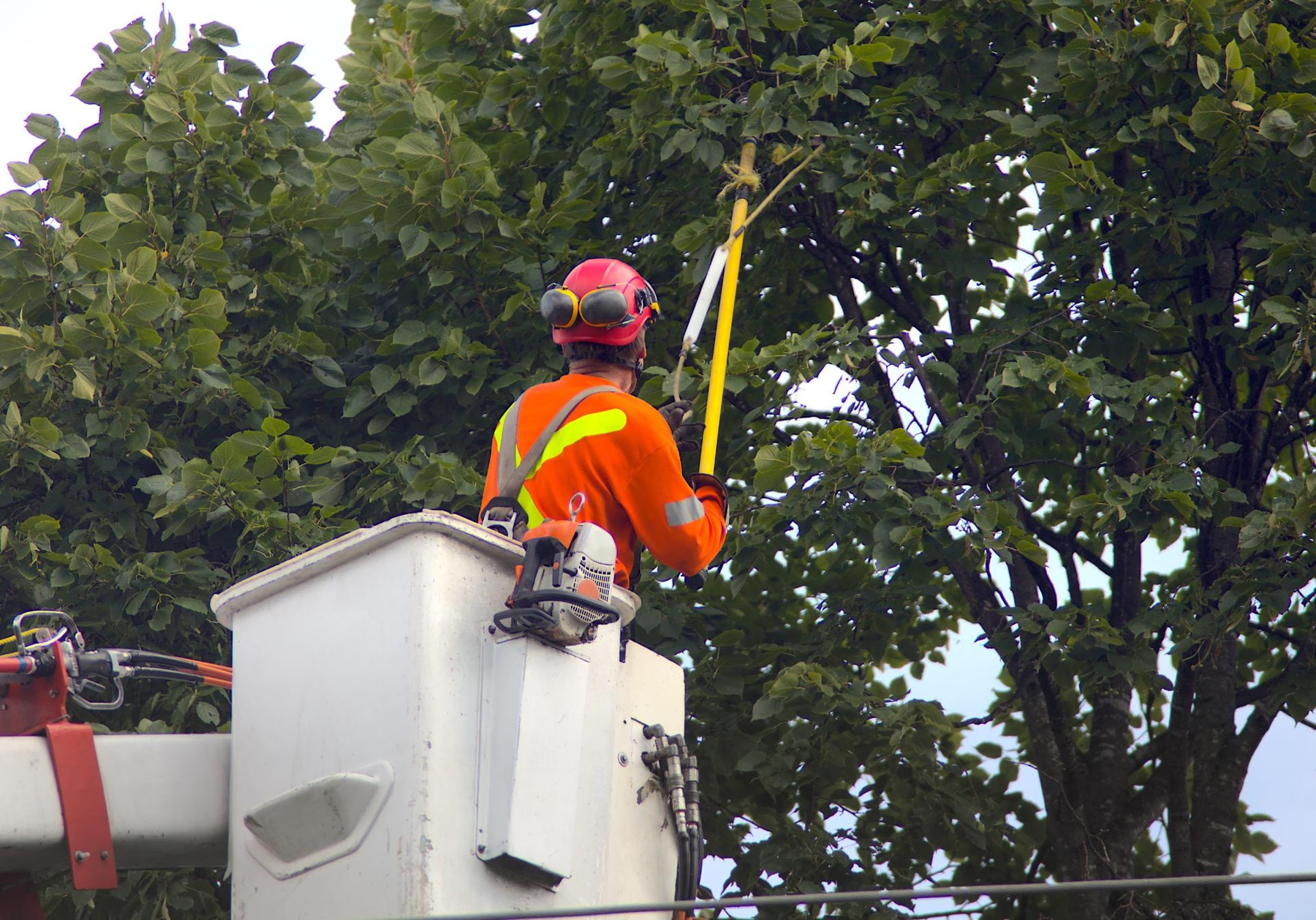
- Take heavy limbs in pieces. Sections over the roof are tied off and lowered, or lifted out with a bucket truck or crane where access allows.
- Make the final cuts right. Each branch is cut just outside the branch collar or back to a side branch, with no stubs.
- Clean up. Debris is cleared from the roof, gutters and yard before the crew leaves.
If a crew plans to drop large limbs onto the roof or climb a tree it's keeping with spikes, ask why. Both are signs to get another opinion.
Get a Free Estimate
If branches are hanging over your roof or crowding the house, Environmental Tree Service will look at the tree and give you a free estimate. Call (916) 870-8154 or send us a message.