Service Areas(916) 870-8154
Environmental Tree Service
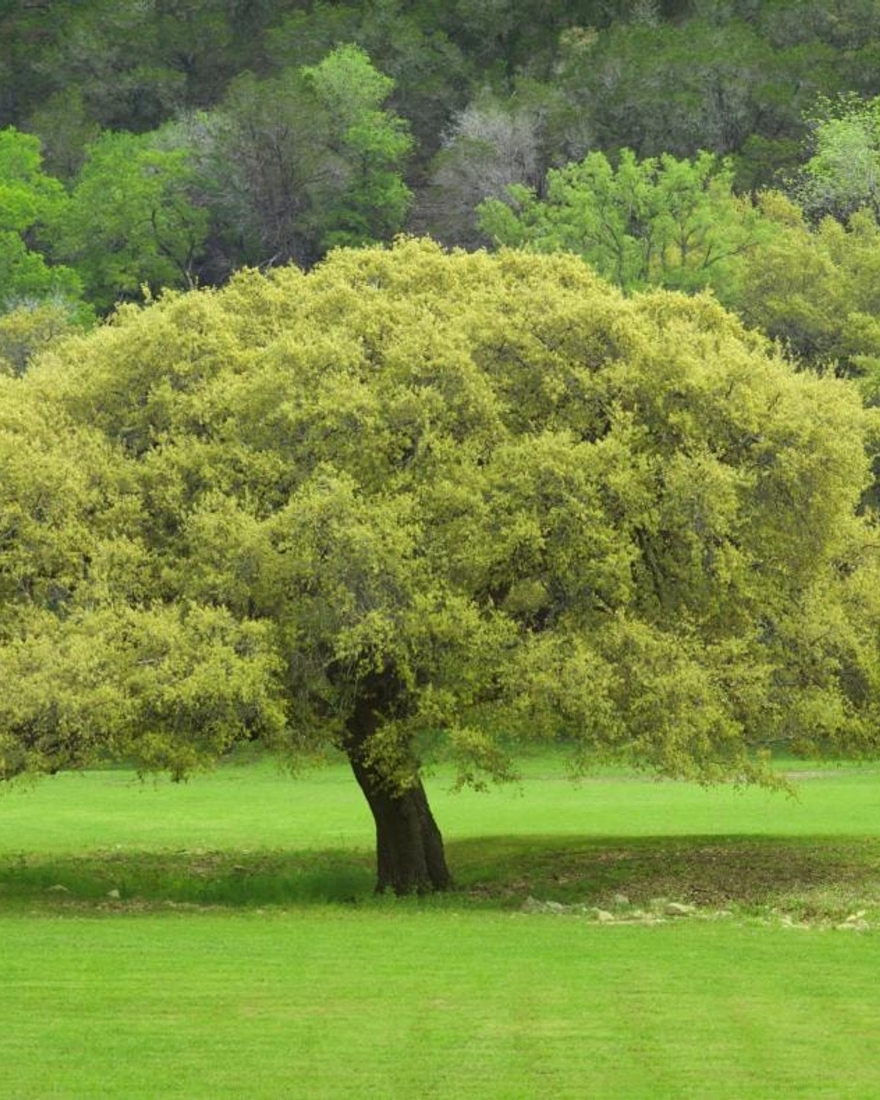
Grove of cork oaks with sunlight through the canopy
Quercus suber

Cork Oak Planting and Care Guide

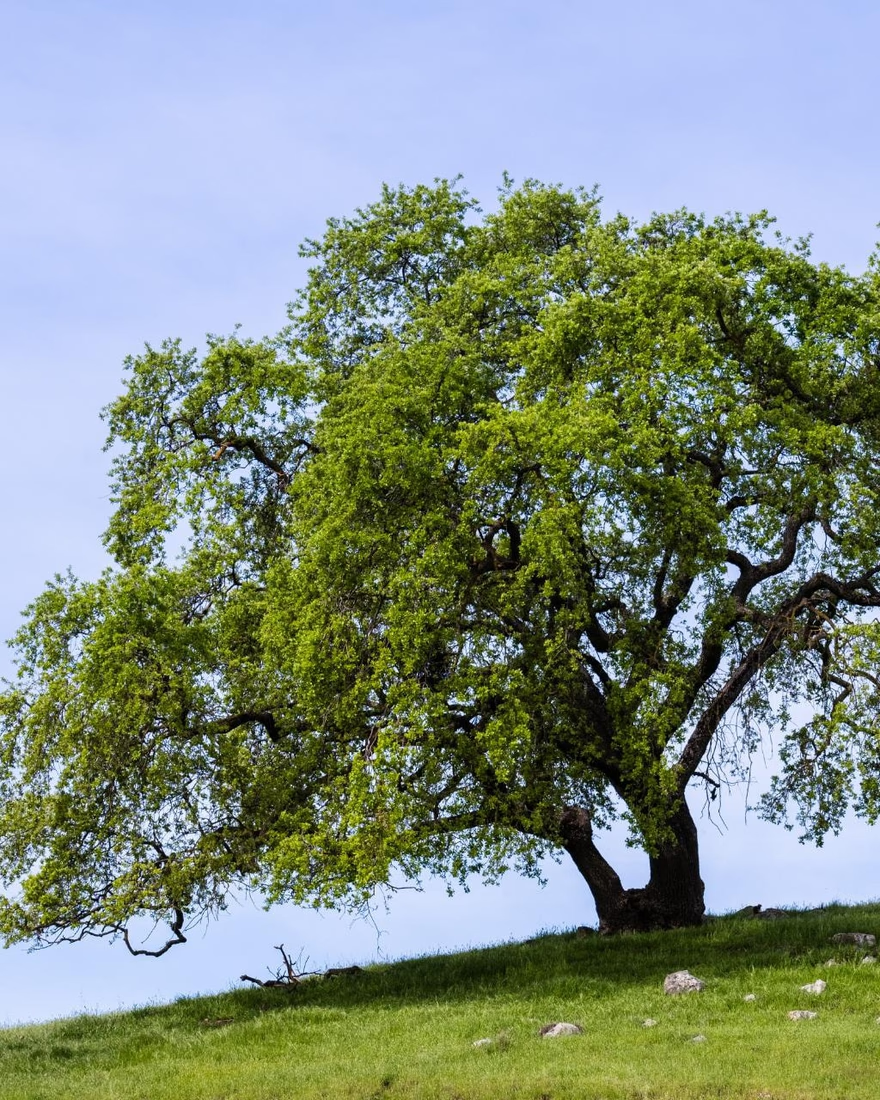
The Cork Oak tree (Quercus suber) is prized for its thick, corky bark, harvested for cork production. Native to southwest Europe and northwest Africa, it boasts a majestic stature and adapts well to various soil types. Drought-tolerant and long-lived, it provides habitat for wildlife and adds character to landscapes.

Steeped in tradition and imbued with historical significance, the Cork Oak tree stands as a testament to human ingenuity and ecological resilience. Renowned for its distinctive bark and versatile applications, this majestic species has been revered for centuries in Mediterranean regions and beyond. In this article, we explore the art of planting and caring for Cork Oak trees, offering insights to help enthusiasts cultivate and preserve these iconic symbols of cultural heritage and environmental stewardship.

Planting Your Cork Oak Tree

Selecting the Ideal Location: Choosing the right location is essential when planting Cork Oak trees. These trees thrive in full sun and well-drained soil, preferably in areas with mild climates and moderate rainfall. Consider the tree’s mature size, as Cork Oaks can reach heights of 30 to 50 feet with a spread of 20 to 40 feet, requiring ample space to grow and develop.

Timing: The best time for planting Cork Oak trees is in late fall or early winter when the trees are dormant. Planting during this period allows the tree to establish its root system before facing the stresses of the growing season. However, container-grown specimens can be planted year-round, provided the soil is workable and not frozen.

Planting Procedure

  1. Begin by digging a hole that is two to three times wider than the tree’s root ball and equally deep.
  2. Gently remove the tree from its container or carefully loosen the roots if it is balled and burlapped.
  3. Place the tree in the center of the hole, ensuring that the top of the root ball is level with the surrounding soil.
  4. Backfill the hole with soil, firming it gently to eliminate air pockets.
  5. Water the tree thoroughly to settle the soil and promote root establishment.
  6. Apply a layer of mulch around the base of the tree, extending it several feet from the trunk to conserve soil moisture and suppress weed growth.

Care

Watering: Cork Oak trees require regular watering, especially during the first few years after planting. Water deeply, providing enough moisture to reach the tree’s extensive root system. During periods of drought, supplemental irrigation may be necessary to ensure the tree’s health and vitality.

Fertilization: Cork Oak trees generally do not require regular fertilization, as they are adapted to thrive in nutrient-poor soils. However, if the tree shows signs of nutrient deficiency, such as yellowing leaves, a balanced fertilizer can be applied in early spring. Use caution to avoid over-fertilization, as excessive nutrients can harm the tree and disrupt its natural balance.

Pruning: Pruning Cork Oak trees should be minimal and performed with care to maintain their natural form and structure. Remove any dead, damaged, or diseased branches as needed, using proper pruning techniques to prevent injury to the tree. Additionally, prune for clearance from structures or pathways, ensuring the tree’s safety and accessibility.

Harvesting Cork: Cork Oak trees are unique in that their bark can be harvested for cork production without harming the tree. Harvesting typically occurs every nine to twelve years, with the first harvest usually taking place when the tree is around 25 years old. Cork harvesting should be performed by skilled professionals to ensure the tree’s health and longevity.

As custodians of tradition and natural beauty, Cork Oak trees enrich the landscapes they inhabit with their grand presence and cultural significance. By following the planting and care guidelines outlined in this article, enthusiasts can cultivate and preserve these iconic trees for future generations to admire and cherish. Whether gracing Mediterranean landscapes, botanical gardens, or urban parks, the Cork Oak stands as a symbol of resilience, sustainability, and the enduring bond between humanity and nature.
Cork Oak: Frequently Asked Questions

What is a Cork Oak tree?

The Cork Oak (Quercus suber) is a species of oak native to southwest Europe and northwest Africa, known for its thick, corky bark

How tall does a Cork Oak tree typically grow?

Cork Oak trees can reach heights of 40 to 60 feet, with a spread of 30 to 40 feet.

What is the main feature of the Cork Oak tree?

The main feature of the Cork Oak tree is its thick, corky bark, which is harvested for cork production.

Is the Cork Oak tree evergreen or deciduous?

The Cork Oak tree is evergreen, retaining its foliage throughout the year

How long does it take for a Cork Oak tree to produce cork?

Cork Oak trees typically need to mature for about 25 years before their bark can be harvested for cork production.

What type of soil does a Cork Oak tree prefer?

Cork Oak trees prefer well-drained, slightly acidic soil, but they can tolerate a variety of soil types, including sandy or rocky soils.

Does a Cork Oak tree require full sun?

Yes, Cork Oak trees thrive in full sun, although they can tolerate partial shade.

Are Cork Oak trees drought-tolerant?

Once established, Cork Oak trees exhibit good drought tolerance, though they benefit from occasional deep watering during dry periods.

When is the best time to plant a Cork Oak tree?

The best time to plant a Cork Oak tree is in the fall or early spring, when temperatures are cooler and the tree can establish its root system.

How do I prune a Cork Oak tree?

Prune Cork Oak trees sparingly and selectively in late winter or early spring to remove dead or diseased branches and to shape the tree as desired.

Are Cork Oak trees susceptible to pests or diseases?

Cork Oak trees are relatively resistant to pests and diseases, although they may occasionally face issues such as oak root rot or oak powdery mildew.

Can I grow grass under a Cork Oak tree?

While Cork Oak trees have shallow root systems, it's generally best to avoid planting grass directly underneath to minimize competition for water and nutrients.

Can I grow a Cork Oak tree in a container?

While possible when young, Cork Oak trees are best suited for planting in the ground due to their eventual size and extensive root system.

Do Cork Oak trees produce acorns?

Yes, Cork Oak trees produce small acorns that are an important food source for wildlife.

How do I fertilize a Cork Oak tree?

Fertilize Cork Oak trees annually in early spring with a balanced fertilizer formulated for trees and shrubs.

Can I grow a Cork Oak tree in a windy area?

Cork Oak trees are relatively wind-resistant but may benefit from some protection in extremely windy locations.

Do Cork Oak trees attract wildlife?

Yes, Cork Oak trees provide habitat and food for various wildlife species, including birds, squirrels, and insects.

How do I propagate a Cork Oak tree?

Cork Oak trees can be propagated from acorns, which should be collected in the fall and planted in well-drained soil.

Are Cork Oak trees regulated or protected?

Cork Oak trees may be protected or regulated in certain regions due to their ecological importance and cultural significance. It's essential to check local regulations before harvesting bark or pruning Cork Oak trees.

Can I harvest cork from my Cork Oak tree?

Yes, you can harvest cork from mature Cork Oak trees every 9 to 12 years without harming the tree. The process involves carefully removing the outer bark layer.

Trees

More Trees for Sacramento Landscapes

All trees
Aerial view of Sacramento neighborhoods under a canopy of fall trees

Planting, Pruning or Removing a Tree?

Call any time, or send a few details about your trees and we'll get back to you with a free, detailed estimate.

Available 24/7

Request a Free Estimate

Looking for reliable tree service in Sacramento? Contact Environmental Tree Service for tree removal, tree trimming, stump grinding and 24/7 emergency tree service. We'll respond promptly with a detailed estimate.

Environmental Tree Service
Call Us, Day or Night
(916) 870-8154
Address
9061 Elder Creek Rd
Sacramento, CA 95829
License
Licensed, bonded and insured. CA Lic. 937241

Request a Service

A few details about your trees help us give you an accurate estimate.