Clearance pruning keeps branches off your roof, out of your gutters and high enough over the driveway and sidewalk that nobody has to duck. This post covers how much space to aim for around a house, how to raise a crown without hurting the tree, what to do about a neighbor's branches, and the one kind of clearance work you should never attempt yourself.
Key Points
- Aim for several feet of open space between branch tips and the house, enough that limbs don't touch even in wind or when heavy with rain.
- Keep branches at least 10 feet from a chimney outlet if you burn wood.
- Get clearance underneath by removing the lowest branches gradually, keeping live branches along at least the upper two-thirds of the tree.
- Shorten limbs with reduction cuts back to side branches. Don't shear a crown flat along the roofline.
- Branches near power lines are a job for SMUD, PG&E or a qualified line-clearance contractor, never a homeowner.
Why Clearance Pruning Matters
Clearance isn't only about looks. Branches resting on shingles scrape away the surface as they move in the wind, and leaves packed into gutters hold water against the roof edge. Overhanging limbs give squirrels and rats a bridge onto the house. Low branches over a driveway get snapped by trucks and leave ragged tears, and limbs over a sidewalk can catch someone in the face after dark.
Sacramento Valley winter storms add wind and the weight of rain to all of this, so a branch that barely touches the roof in August can be pounding on it in January. Fall is a good time to check, before the storm season starts. If you're worried about whole limbs failing rather than just rubbing, our post on reducing storm risk in large trees before winter goes into that.
How Far Should Tree Branches Be From Your House?
Around a house, the goal is a clear gap between the crown and the structure, wide enough that branches don't touch even when they swing in wind or sag when wet. A few practical points:
- Roofs and walls: aim for several feet of open space between branch tips and the building. Limbs growing toward the house are usually best shortened with a reduction cut back to a side branch pointing away from it, rather than chopped off at the roofline.
- Gutters: pruning won't stop leaf drop from a tree that stands over the house, but pulling branch tips back from the eaves keeps debris from landing straight in the gutter and makes cleaning easier.
- Chimneys: fire safety guidance commonly calls for keeping branches at least 10 feet from a chimney outlet. If you burn wood, treat this one as a priority.
- Windows, vents and air conditioners: branches that brush a window screen or crowd an outdoor AC unit are worth pulling back, since the unit needs open air around it to work well.
Work from the tree's structure, not the outline of the house. Shearing a crown flat along the roofline leaves a row of stubs that send dense regrowth straight back toward the shingles, so you end up with more branches against the roof, not fewer. A good tree reduction removes whole limbs or shortens them to a side branch at least about a third the diameter of the removed stem, which redirects growth instead of provoking it.
If you live near open grassland or in one of the foothill communities, your local fire agency may have its own guidance for how close branches can be to the house. It's worth asking before you plan the work.
How High Should Branches Be Over a Sidewalk or Driveway?
Clearance underneath a tree comes from crown raising, which means removing the lowest branches so people and vehicles can pass. Many cities set their own clearance standards over sidewalks and streets, and a tree in the strip between sidewalk and curb may belong to the city, so check with your city before working on one. As a general guide, people on the sidewalk should be able to walk under the tree with an open umbrella without ducking, and branches over a driveway should clear the tallest vehicle that uses it, with extra room for limbs that sag after rain.
Don't forget streetlights and signs. A crown that hides a stop sign or throws a sidewalk into darkness is a safety problem, and a few well-chosen cuts usually open it up.
Crown Raising Done Right
The classic mistake is taking too much off the bottom. A tree stripped up to a tuft of leaves at the top has lost much of its food-making canopy, carries more of its weight and wind load up high, and often answers with sprouts all along the bare trunk. To raise a crown properly:
- Keep live branches along at least the upper two-thirds of the tree's height.
- Raise young trees gradually over several years. Their lower branches help the trunk grow thicker and stronger.
- Remove whole branches back to the trunk, cutting just outside the branch collar, rather than leaving stubs.
- On a big, low limb of a mature tree, consider shortening it with a reduction cut instead of removing it, since a large wound near the trunk is costly to the tree.
Opening Up Views and Light
If you want a view or more sun on a garden, the answer is rarely to cut the tree down to size. Selective thinning of a few branches can open a window through the crown, and raising or shortening limbs on one side can bring in light while leaving the tree's form intact. On most mature trees, remove no more than about a quarter of the live canopy in a season, and let the tree recover before doing more. Our post on thinning your tree canopy for more light and air explains how that's done without overdoing it.
Native oaks are protected in many Sacramento-area cities and the county, so check with your city or county before heavily pruning one, even if the goal is only a better view.
Branches From a Neighbor's Tree
Overhanging branches from next door are one of the most common clearance questions. Generally, you may trim branches that hang over your side of the property line, but you can't cut in a way that harms the tree, and you can't go onto your neighbor's property to do it without permission. A cut that damages or kills a neighbor's tree can leave you responsible for it.
In practice, the best approach is to talk first. Your neighbor may be glad to share the job, and a tree service can prune both sides of the crown at once so the tree stays balanced. Cutting everything back to the fence line from one side often leaves a lopsided tree full of stubs. If the tree is a protected oak or a city street tree, check with the city or county before anyone cuts.
Stay Away From Power Lines
Branches near overhead power lines are a job for the utility, not for a homeowner. Electricity can jump to a branch, a ladder or a pole saw without direct contact, and a limb touching a line can carry current itself. Keep yourself, your ladder and your tools well clear (utilities commonly advise at least 10 feet), and call SMUD or PG&E, whichever serves your address, or a qualified line-clearance contractor. If branches are tangled in the line that runs to your house, call the utility and ask how they want it handled. Our post on trimming trees near your house, roof and power lines covers the safety side in more depth.
A Clearance Walk-Around Checklist
Once a year, ideally in fall, walk around your property and look for these:
- Branches touching or within a few feet of the roof, siding or windows
- Leaves and twigs collecting in gutters directly under branch tips
- Any branch within 10 feet of a chimney you use
- Limbs reaching toward the power or cable line that runs to the house (note it and call the utility)
- Low branches over the driveway that scrape vehicles or show fresh tears
- Branches you have to duck under on the sidewalk or front walk
- Streetlights, house numbers or signs hidden by foliage
- Dead or cracked branches hanging over the roof, patio, cars or play areas
- Limbs resting on a fence or pressing against an outbuilding
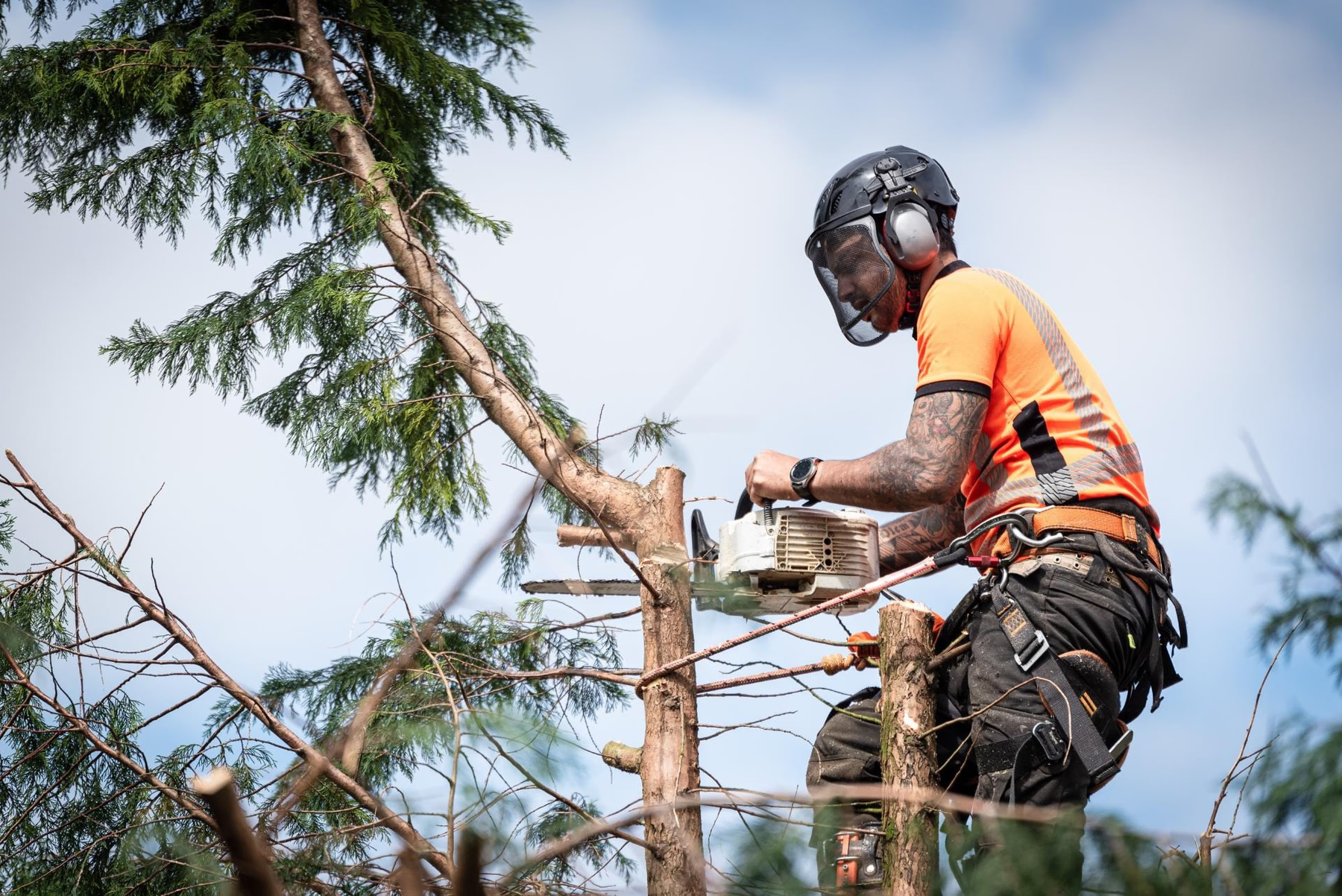
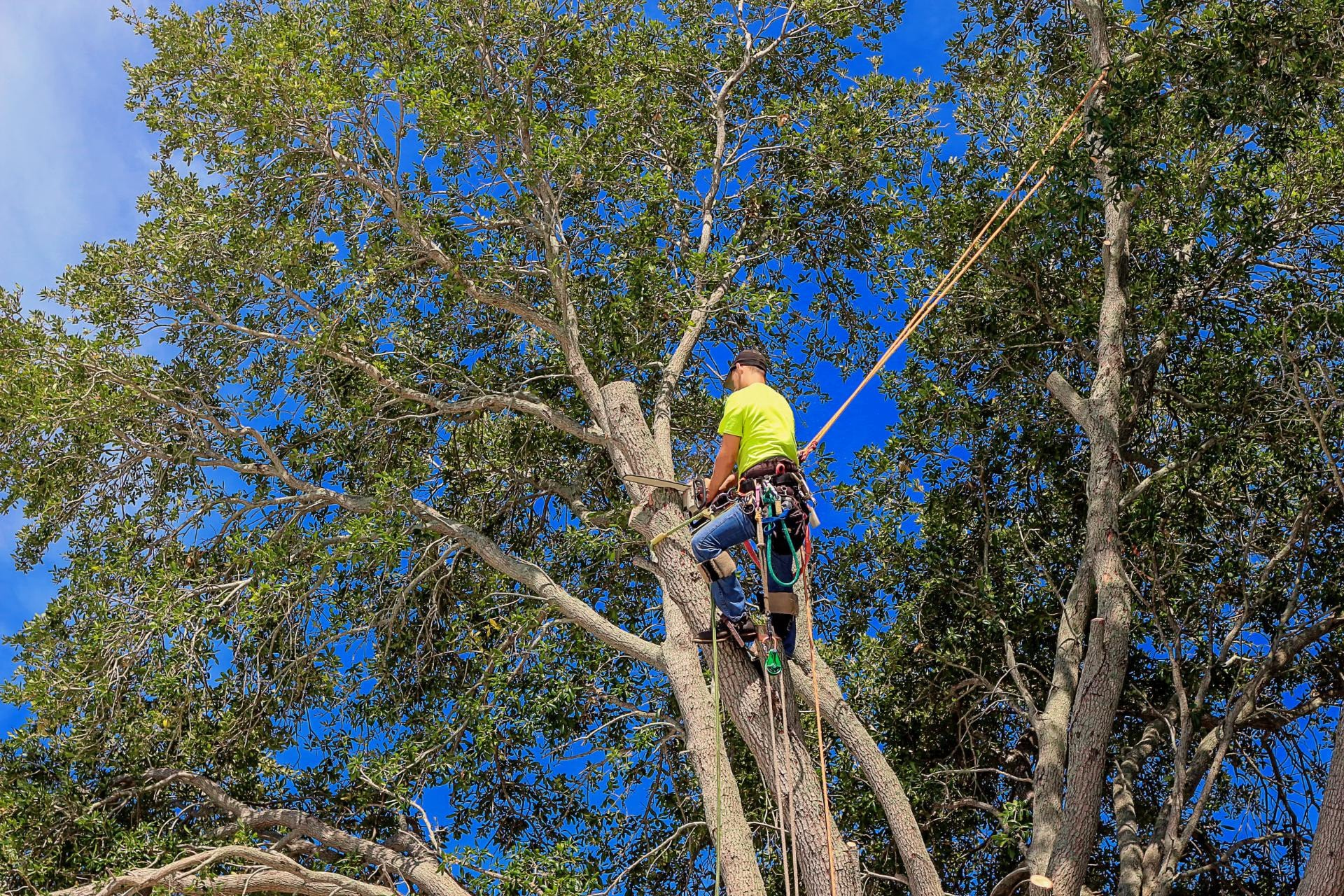
Anything you can reach from the ground with hand pruners or a pole pruner is fair game. Anything over the roof, near a line or big enough to need a saw overhead belongs to a professional.
Schedule Clearance Pruning
Environmental Tree Service handles tree trimming and clearance pruning for homes and commercial properties across the Sacramento area. Call (916) 870-8154 or request a free estimate.