Service Areas(916) 870-8154
Environmental Tree Service
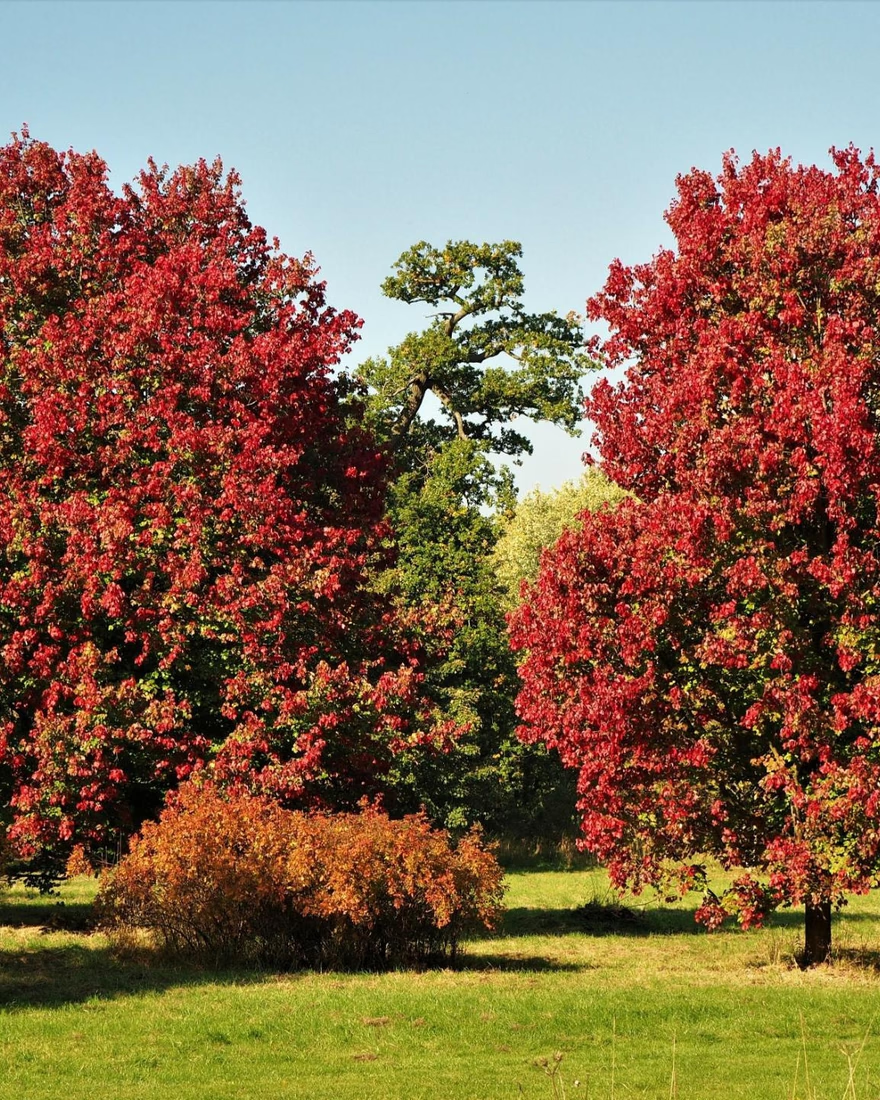
Chinese pistache in full fall color, red and orange
Pistacia chinensis 'Keith Davis'

Chinese Pistache Planting and Care Guide

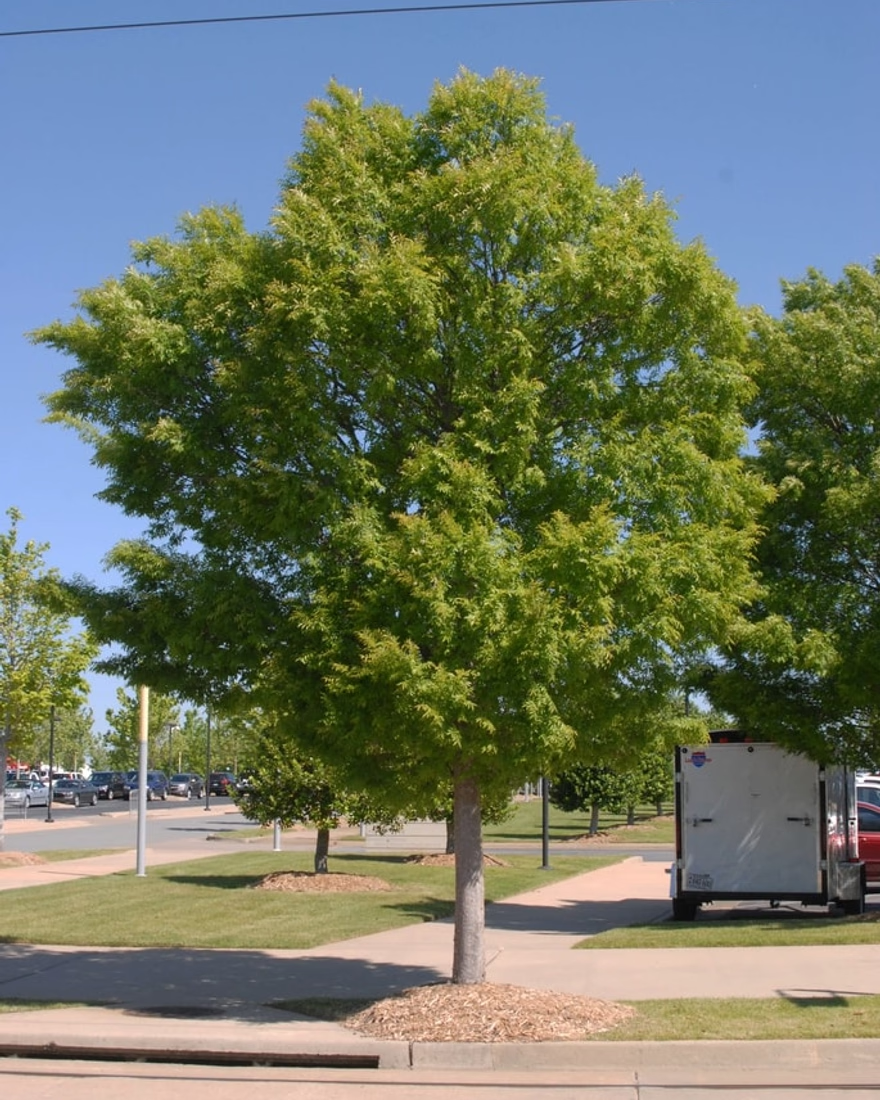
The Chinese Pistache, popularized by horticulturist Keith Davis, is a deciduous tree valued for its ornamental qualities. It features a vibrant display of fall foliage, transitioning from green to shades of red, orange, and yellow. With a moderate growth rate and a spreading canopy, it’s an excellent choice for landscaping in various climates.

The Chinese Pistache tree is renowned for its breathtaking fall foliage. In spring and summer, it boasts lush green leaves that provide shade and beauty to any landscape. However, it’s in the fall when the Chinese Pistache truly shines. The leaves transform into a vibrant palette of reds, oranges, and yellows, creating a breathtaking display of autumn color that rivals even the most spectacular maple trees.

Planting Your Chinese Pistache Tree

Planting a Chinese Pistache tree is relatively straightforward, but there are a few key considerations to keep in mind:

Choose the Right Location: Select a location that receives full sun to partial shade and has well-draining soil. Avoid areas prone to waterlogging, as Chinese Pistache trees prefer soil that is not constantly saturated.

Prepare the Soil: Dig a hole that is two to three times wider than the root ball of the tree and slightly shallower than the depth of the root ball. Loosen the soil in the planting area to encourage healthy root growth.

Planting the Tree: Carefully remove the Chinese Pistache tree from its container and gently loosen the roots. Place the tree in the center of the hole, ensuring that the top of the root ball is level with the surrounding soil. Backfill the hole with soil and water thoroughly to settle the soil around the roots.

Caring for Your Chinese Pistache Tree

Once planted, your Chinese Pistache tree will require minimal maintenance. Here are some tips for caring for your tree:

Watering: Water newly planted Chinese Pistache trees regularly, keeping the soil consistently moist but not waterlogged. Once established, water deeply but infrequently, allowing the soil to dry out between waterings.

Pruning: Prune Chinese Pistache trees in late winter or early spring to remove any dead, diseased, or crossing branches. You can also shape the tree by selectively pruning branches to maintain its desired form.

Fertilizing: Chinese Pistache trees are relatively low-maintenance and typically do not require regular fertilization. However, you can apply a balanced fertilizer in early spring if growth appears stunted or foliage is pale.

Pest and Disease Control: Chinese Pistache trees are generally resistant to pests and diseases, but occasional issues may arise. Monitor your tree regularly for signs of pests or disease, such as leaf spots or abnormal growth, and address any problems promptly.

The Chinese Pistache tree is a true standout in any landscape, thanks to its stunning foliage and low maintenance requirements. By following these planting and care guidelines, you can enjoy the beauty and benefits of this magnificent tree for years to come. Whether planted as a specimen tree, along streets and avenues, or in parks and public spaces, the Chinese Pistache is sure to enhance the beauty and biodiversity of its surroundings.
Chinese Pistache: Frequently Asked Questions

What is a Chinese Pistache tree?

A Chinese Pistache tree is a deciduous tree known for its vibrant fall foliage and drought tolerance.

How tall does a Chinese Pistache tree grow?

Chinese Pistache trees typically reach heights of 25 to 40 feet at maturity.

What is the botanical name of the Chinese Pistache tree?

The botanical name of the Chinese Pistache tree is Pistacia chinensis.

What type of soil does a Chinese Pistache tree prefer?

Chinese Pistache trees prefer well-drained soil but can tolerate a wide range of soil types, including clay and loam.

How fast does a Chinese Pistache tree grow?

Chinese Pistache trees are moderately fast-growing, averaging about 1 to 2 feet of growth per year.

When is the best time to plant a Chinese Pistache tree?

The best time to plant a Chinese Pistache tree is in late fall or early spring when the tree is dormant.

Does a Chinese Pistache tree require full sun?

Yes, Chinese Pistache trees thrive in full sun but can tolerate partial shade.

Are Chinese Pistache trees drought-tolerant?

Yes, Chinese Pistache trees are known for their drought tolerance once established.

How often should I water a Chinese Pistache tree?

Water newly planted Chinese Pistache trees deeply once a week, gradually reducing frequency as the tree becomes established.

Do Chinese Pistache trees have invasive roots?

No, Chinese Pistache trees have non-invasive root systems, making them suitable for planting near sidewalks and structures.

Do Chinese Pistache trees produce fruit?

Yes, Chinese Pistache trees produce small red berries, but they are not typically consumed by humans.

Are Chinese Pistache trees susceptible to pests and diseases?

Chinese Pistache trees are relatively resistant to pests and diseases, but they may occasionally face issues such as aphids or powdery mildew.

When do Chinese Pistache trees bloom?

Chinese Pistache trees bloom in spring, producing inconspicuous greenish-yellow flowers.

How do I prune a Chinese Pistache tree?

Prune Chinese Pistache trees in late winter or early spring to remove dead or diseased branches and to shape the tree as desired.

Can I grow a Chinese Pistache tree in a container?

While Chinese Pistache trees can be grown in containers when young, they are best suited for planting in the ground for long-term growth.

How do I fertilize a Chinese Pistache tree?

Fertilize Chinese Pistache trees annually in early spring with a balanced fertilizer to promote healthy growth.

How do I propagate a Chinese Pistache tree?

Chinese Pistache trees can be propagated from seeds or through grafting.

Do Chinese Pistache trees change color in the fall?

Yes, Chinese Pistache trees are prized for their vibrant red, orange, and yellow foliage in the fall.

Can Chinese Pistache trees tolerate pollution?

Yes, Chinese Pistache trees are tolerant of urban pollution and are suitable for planting in city landscapes.

Trees

More Trees for Sacramento Landscapes

All trees
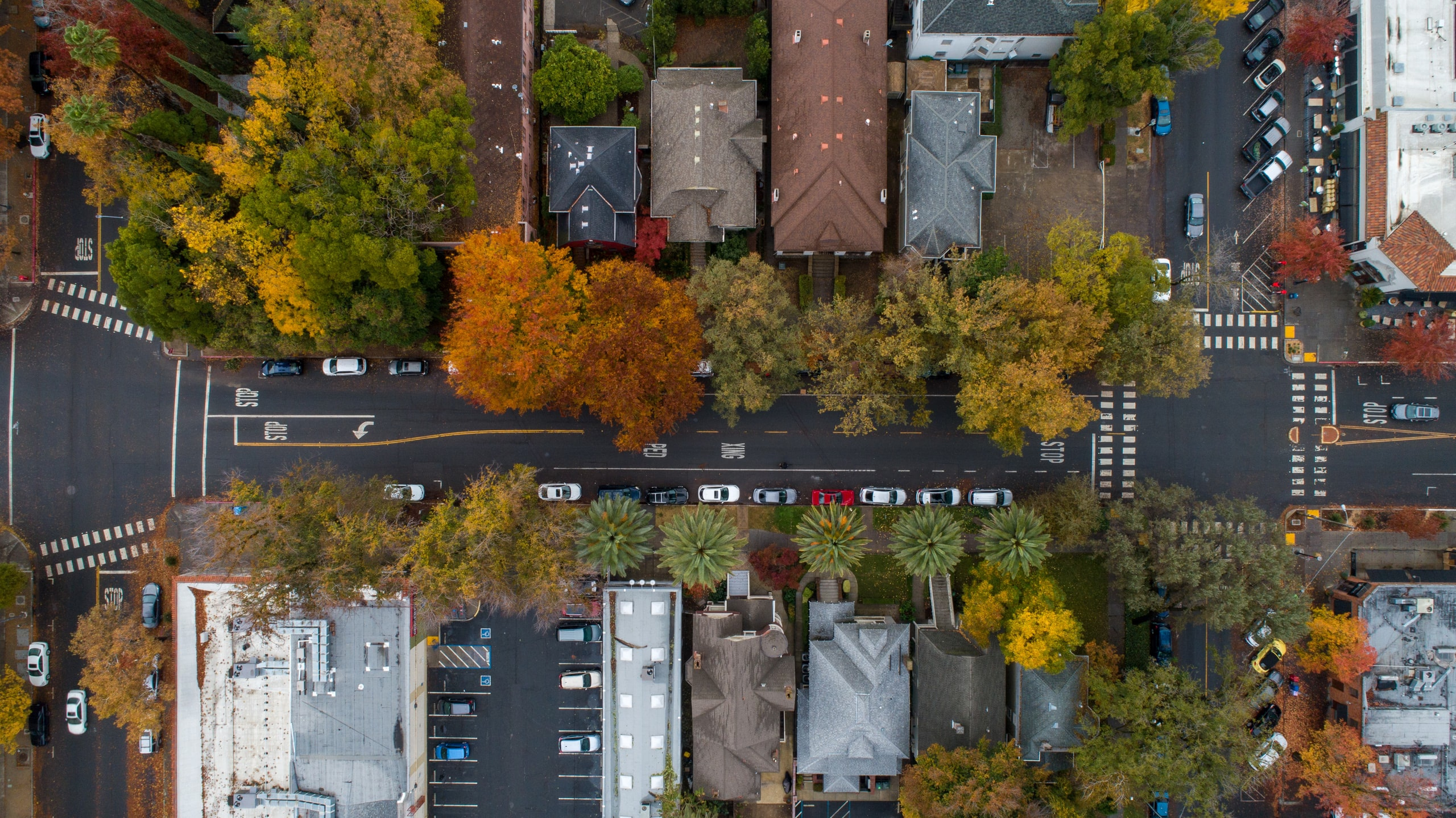
Aerial view of Sacramento neighborhoods under a canopy of fall trees

Planting, Pruning or Removing a Tree?

Call any time, or send a few details about your trees and we'll get back to you with a free, detailed estimate.

Available 24/7

Request a Free Estimate

Looking for reliable tree service in Sacramento? Contact Environmental Tree Service for tree removal, tree trimming, stump grinding and 24/7 emergency tree service. We'll respond promptly with a detailed estimate.

Environmental Tree Service
Call Us, Day or Night
(916) 870-8154
Address
9061 Elder Creek Rd
Sacramento, CA 95829
License
Licensed, bonded and insured. CA Lic. 937241

Request a Service

A few details about your trees help us give you an accurate estimate.