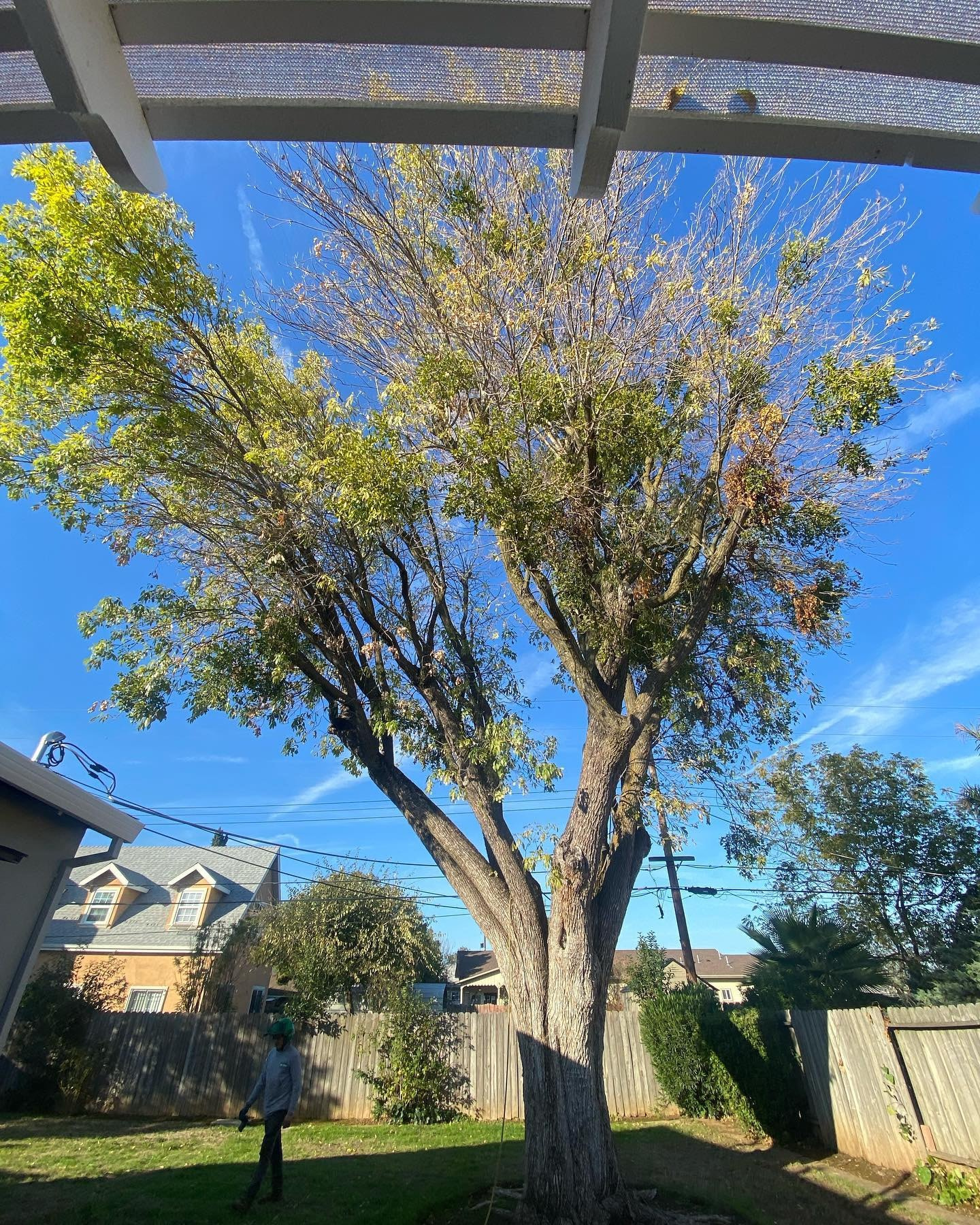
How often trees should be trimmed depends on the tree, not the calendar. Age, growth rate, species and what sits underneath all change the answer. Here's how to think about timing for the trees on your property, what happens when trimming is skipped or overdone, and how to tell when a tree has gone too long.
Key Points
- Young trees: a light structural check every year or two for the first several years.
- Mature shade trees: often every three to five years, focused on dead wood, clearance and weak limbs.
- Fruit trees need pruning every year. Palms need dead fronds removed about once a year.
- Fast growers and trees that hang over the house need a look more often.
- Dead limbs, cracks or branches on the roof mean the tree is due now, whatever the schedule says.
Young Trees vs. Mature Trees
Young trees benefit from the most frequent attention, but the lightest. In the first several years after planting, a quick structural check every year or two lets you remove a competing leader or a badly placed branch while the cut is still small. Those small corrections are what give a tree a strong trunk and well-spaced limbs for the rest of its life. Our guide to structural pruning for young trees walks through what to look for.
Mature trees usually need less. Many established shade trees do well with professional trimming every three to five years, focused on dead wood, clearance and any weak limbs. A healthy, well-structured old tree growing in open space may need little more than an occasional dead wood cleanup. Trimming a mature tree too often, or taking too much at once, stresses it more than it helps.
Very old trees are their own category. As a tree ages, it has less energy to spare for closing wounds and replacing leaves, so work on a veteran oak or sycamore should be light, targeted and spaced out.
Fast Growers vs. Slow Growers
Growth rate changes the math. A fast grower can outgrow its space between visits, while a slow grower may look the same for years.
- Faster growers: Modesto ash, Chinese elm and London plane push out a lot of new wood and often need attention on the shorter end of the range, especially near buildings.
- Slower growers: valley oak, live oak and deodar cedar change more gradually. They mostly need periodic dead wood removal and clearance, not regular cutting.
- In between: Chinese pistache grows at a moderate pace and benefits from structural pruning while young so it forms a strong, balanced crown.
Native oaks deserve extra care. Many are protected in Sacramento-area cities and the county, so check with your city or county before any heavy pruning. Trees along the street may also belong to the city, so ask before pruning a street tree yourself.
Growing conditions matter as much as species. Water and fertilizer speed growth, so a tree in a watered, fertilized lawn often grows faster than the same kind of tree in a dry corner of the yard. If your sprinklers reach a tree, expect it to need trimming sooner than the ranges above suggest.
Fruit Trees, Palms and Other Special Cases
Fruit Trees
Fruit trees are the exception to the "less is more" rule. Most need pruning every year to keep them productive, manageable and easy to pick. The main pruning is usually done in the dormant season, though apricots and cherries are often pruned in late summer instead to limit disease.
Palms
Palms don't branch, so trimming means removing dead fronds and old flower and fruit stalks, usually about once a year. Resist the urge to strip green fronds. Cutting a palm down to a tight tuft at the top weakens it and doesn't slow its growth.
Crape Myrtles
A light annual cleanup of suckers, crossing branches and old seed heads keeps a crape myrtle looking good. Cutting every branch back to the same stubs each winter is a habit worth breaking.
Redwoods and Cedars
Conifers like redwood and deodar cedar rarely need routine cutting. Dead wood, clearance over the roof and the occasional broken limb are usually all. Never top them, since the regrowth forms multiple weak tops.
Trees Near Structures
Any tree that overhangs the roof, touches the house or reaches toward a line needs a more frequent look, often every year or two, no matter how slowly it grows. The goal is to keep clearance before branches make contact. Trees near power lines are the utility's job, not yours.
What Happens If You Don't Trim Your Trees
Skipping trimming for a few years rarely hurts a healthy tree in open ground. The problems build slowly around houses, driveways and play areas. Dead branches pile up in the canopy and fall in the first strong wind. Long limbs keep adding weight at the ends. A young tree left alone can grow two trunks of equal size that eventually split apart, and that's a problem you can't fix with one visit once the tree is big.
Trimming that has been put off for a decade usually can't be caught up in one visit without taking too much. A good crew handles the safety cuts first (dead wood, hanging branches and heavy weight over the house) and spreads the rest over two or more visits a few years apart.
Can You Trim a Tree Too Often
Yes. Every live branch removed takes away leaves that feed the tree, and every cut is a wound it has to close. Trimming a mature shade tree hard every year keeps it stressed and short on stored energy. For most mature trees, no more than about a quarter of the live canopy should come off in one season. Signs a tree is being over-trimmed:
- Thick clusters of fast, upright shoots sprouting along the limbs after each trimming
- A thin canopy with small leaves where it used to be full
- Leaves only at the ends of long, bare branches
- Old cuts that haven't closed, with dark or soft wood at the center
If you see these signs, give the tree a few years to recover before any more live wood comes out. Keep mulch over the root zone, water it through the summer if it isn't a native oak, and limit the next visit to dead and broken wood.
A Simple Schedule for How Often to Trim
You don't need a complicated plan. A rhythm like this covers most yards:
- Walk the property every fall before storm season and look up at every tree.
- Check young trees every year or two and make small structural corrections.
- Schedule mature shade trees every few years, sooner for fast growers and trees near the house.
- Prune fruit trees every year at the right season for the type.
- Look over every large tree after a major windstorm, even if nothing fell.
Keeping a simple note of when each tree was last worked on makes the cycle easy to follow. If you have several large trees, staggering them so one or two get work each year spreads out the cost and keeps every tree on a regular cycle. For the best month to do each kind of work, see our seasonal tree care calendar for Sacramento.
Signs a Tree Is Overdue for Trimming
Whatever the schedule says, some signs mean it's time now:
- Dead branches that stay bare through spring and summer
- Broken limbs hung up in the canopy
- Branches touching the roof, siding, windows or fence
- Limbs low enough that you duck to walk or mow under them
- A canopy so dense the lawn beneath it is thinning out
- Cracks where large limbs meet the trunk, or two trunks splitting apart
- Long, heavy limbs reaching far out over the driveway, patio or house
Cracks, splits and hanging limbs are the urgent ones. Keep people and cars out from under them and have the tree looked at soon. If the trunk itself is cracked, hollow or the whole tree has started to lean, trimming may not be enough. Our guide to signs a tree should come down and when it can be saved explains how that call gets made.
Set Up a Trimming Schedule
Not sure where your trees stand? Environmental Tree Service will look them over and give you a free estimate. Call (916) 870-8154 or contact us.