Tree trimming, pruning, thinning and crown raising are words crews use every day, but when you call a tree service and ask for your tree to be "trimmed," the person on the other end could picture a dozen different jobs. This post explains the terms, what each one does to the tree, what good cuts look like, and how to describe what you want so the estimate you get matches the work you had in mind.
Key Points
- Trimming and pruning mean nearly the same thing. What matters is the specific work: which branches, how much and why.
- The main types of work are crown cleaning, thinning, crown raising, crown reduction, structural pruning and shaping.
- For most mature trees, no more than about a quarter of the live canopy should come off in one season.
- Topping and lion-tailing are not styles to ask for. Both weaken the tree.
- Describe the problem and the result you want, then make sure the written estimate says it in plain words.
Tree Trimming vs. Pruning
In everyday use, trimming and pruning overlap almost completely. Some people use "trimming" for cutting back overgrowth and clearing space, and "pruning" for more selective cuts made for the tree's health and structure. Arborists tend to say pruning for all of it. Either word is fine to use on the phone.
What matters is not the word but the specific work: which branches come out, how much, and why. Two companies can both quote "trim oak tree" and be pricing completely different jobs. The terms below are how you get specific. You can also read about our tree pruning service for more detail.
The Common Types of Tree Work
Crown Cleaning
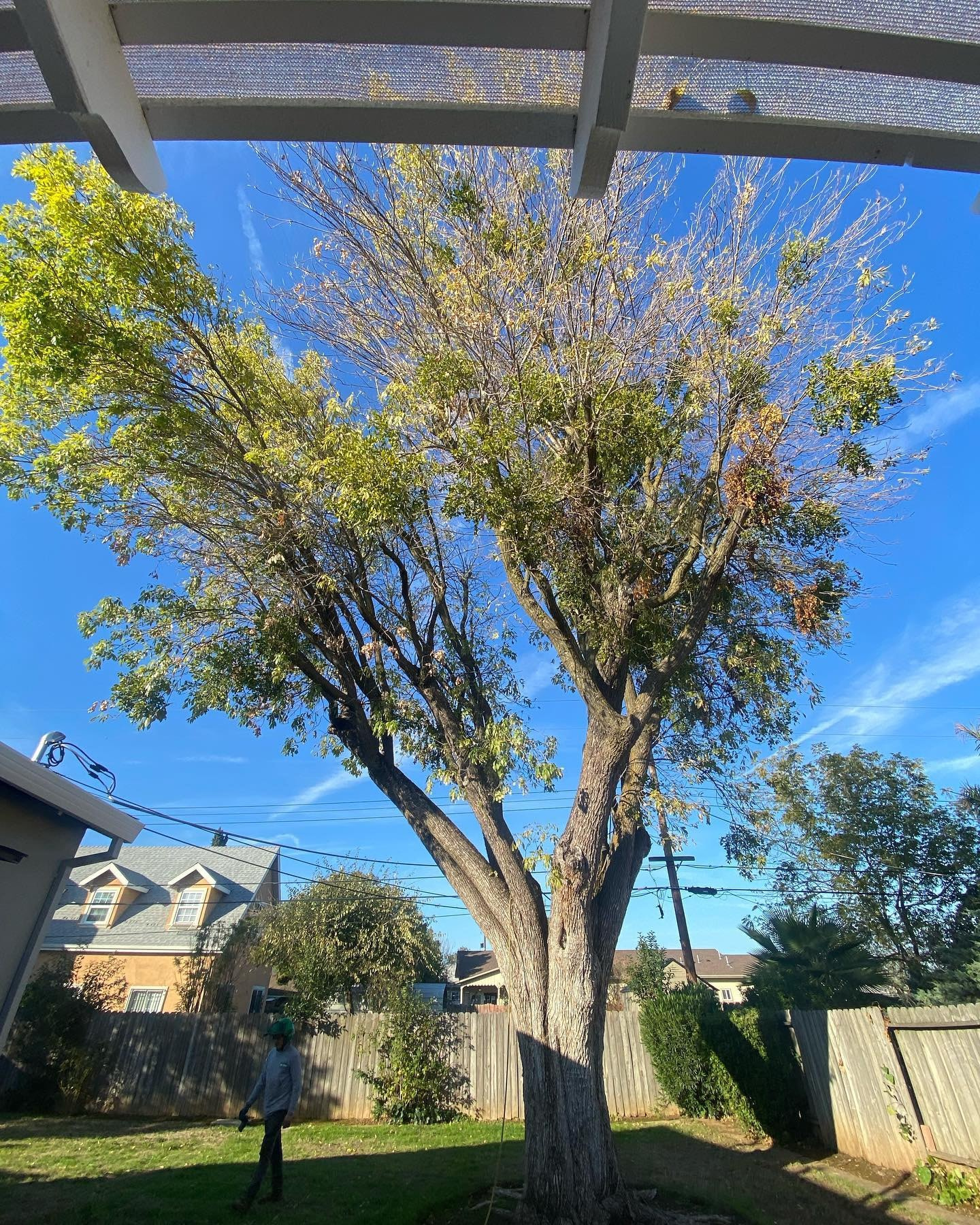
Removing dead, dying, broken and diseased branches, plus branches that cross and rub. It doesn't change the look of the tree much, but it removes the wood most likely to fall. This is the most common request for mature trees, and it can be done in almost any season.
Thinning
Taking out selected live branches spread evenly through the canopy to reduce density. It lets more light and air through and reduces how much the tree catches wind. Done right, the tree keeps its natural shape. Done wrong, the inner branches get stripped and all the leaves are left at the ends of long bare limbs, which is called lion-tailing and makes limbs more likely to break.
Crown Raising
Removing the lowest limbs to create clearance underneath: over a sidewalk, driveway, roof, lawn or view. The key question is how much clearance you need. Taking off too many lower limbs leaves a tall, top-heavy tree, and it's best done a little at a time on a young tree rather than all at once on an old one.
Crown Reduction
Making the tree smaller in height or spread by cutting branches back to a side branch big enough to take over as the new end, generally at least about a third the diameter of the stem being removed. This keeps the tree's form while pulling it back from a house or line. It takes skill and isn't possible on every tree. See our tree reduction page.
Structural Pruning
Small, early cuts on young trees to build one strong trunk and well-spaced limbs. It's the cheapest tree care you'll ever buy, because it prevents big problems later.
Shaping and Hedging
Pruning mainly for appearance, such as keeping an ornamental tree balanced or maintaining a formal look near an entry. Shearing belongs on hedges and screens, not shade trees. Our tree shaping service covers this kind of work, and our guide to keeping hedges, screens and topiary healthy explains how sheared plants are kept in good shape.
Several of these usually happen on the same visit. A typical job on a mature backyard tree might be crown cleaning, light thinning and raising over the patio. For a side-by-side look, see crown thinning, raising, reduction and cleaning compared.
What Good Pruning Cuts Look Like
Whatever the type of work, the quality comes down to where each cut is made. Every branch has a slightly swollen ring at its base, called the branch collar, and that's where the tree seals the wound. Good cuts respect it.
- Cut just outside the branch collar. Not flush against the trunk, which cuts into the tissue that closes the wound.
- Leave no stubs. A stub can't close over, so it tends to decay back toward the trunk.
- Use three cuts on heavy limbs. An undercut and a top cut remove the weight first, so the bark doesn't tear down the trunk, then a final clean cut at the collar.
- Cut back to a lateral. When shortening a branch, cut to a side branch big enough to take over, not to an arbitrary point.
- Skip the wound paint. Trees seal cuts on their own, and dressing is generally unnecessary.
- No climbing spikes on a tree being kept. Spikes wound the trunk. They're for removals only.
Our post on how trees respond to pruning cuts explains what happens inside the wood after each kind of cut.
How Much Can Be Removed at Once
Leaves are how a tree feeds itself, so every live branch removed costs it something. For most mature trees, keep it to no more than about a quarter of the live canopy in one season, and often much less. Old, stressed or recently damaged trees should lose less. When a tree needs more work than that, a good plan spreads it over two or three visits a few years apart.
Dead wood doesn't count toward that limit, since it isn't feeding the tree. That's one reason crown cleaning is such a safe first step.
Timing plays into it too. The same amount of work is easier on a deciduous tree in the dormant season than in the middle of a Sacramento summer, when the tree is already short on water and newly exposed bark can sunburn. If you're planning heavy thinning or a reduction, ask whether it should wait for winter.
What Topping Is and Why to Avoid It
Topping means cutting the top of a tree or its main limbs back to stubs, with no regard for where a side branch is. It's sometimes sold as a way to make a tree "safer" or smaller. It does the opposite. The stubs decay, and the tree answers with a thick bundle of fast, weakly attached shoots that become heavy and prone to breaking within a few years. If a quote says "top" or "cut back hard," ask what the cuts will look like, or ask about reduction instead.
Topping is not the same as pollarding. Pollarding is a planned style that starts when a tree is young and is cut back to the same knuckles on a regular cycle for life. Topping a mature tree that was never trained that way just creates the problems above.
How to Describe What You Want
You don't need to know the right cut to ask for good work. Describe the problem and the result you want, and let the estimator recommend the method. Before the visit, write down:
- Which tree: the species if you know it, or "the big tree in the backyard by the fence."
- The problem: branches on the roof, dead limbs over the patio, too much shade on the lawn, blocking a streetlight.
- The goal: clearance to walk or park under, more light, less weight over the house.
- What to keep: afternoon shade, privacy from the neighbors, the natural shape.
- Cleanup: whether you want all debris hauled away, wood left for firewood, or chips left for mulch.
Reading the Estimate
When you get the estimate, check that it names the tree, the type of work and the goal in plain words. "Remove dead wood over roof and raise canopy over driveway" is a clear scope. "Trim tree" is not. If you're comparing bids, make sure each one describes the same job before you compare the numbers. It's fair to ask how much of the canopy they expect to remove and where the cuts will be made.
Get a Free Estimate
Tell us what's bothering you about your tree and we'll recommend the right work in writing. Call Environmental Tree Service at (916) 870-8154 or request a free estimate.