When a tree has outgrown your yard, you have two real choices: reduce it and keep it in bounds, or remove it and plant something that fits. Plenty of Sacramento-area lots have a tree that was a sensible size when it went in and now shades the whole yard, crowds the house and hangs over the fence. This post helps you decide which path is the honest answer for yours.
Key Points
- Reduction works when the tree needs to shrink by a few feet, the species takes it well and you're willing to maintain it every few years.
- Replacement makes more sense when the tree would have to be topped to fit, when roots are the real problem, or when the tree is declining.
- Crown reduction doesn't shrink roots. It won't fix a lifted driveway or a crowded sewer line.
- A tree chosen for its mature size needs only light, occasional pruning.
- Native oaks and other protected trees may need city or county approval before removal or heavy pruning.
Why Trees Outgrow Small Lots
Most of the time the tree isn't doing anything wrong. It's growing to the size its species is meant to reach. The mismatch usually comes from one of a few places:
- A large shade tree, such as a London plane, sycamore or Modesto ash, planted in a narrow side yard or a small backyard
- A redwood or deodar cedar planted close to the house when it was a few feet tall
- A tree planted under or near power lines
- A tree that was fine for the original yard, until a patio, addition or pool took up the space around it
Knowing which of these you're dealing with goes a long way toward knowing what to do. A shade tree that's simply a bit big for its spot is often a good reduction candidate. A redwood by the foundation or a tree tangled in lines usually isn't, because the fix would mean cutting the tree in ways it can't recover from. Trees near power lines are the utility's job: stay clear and call SMUD or PG&E, or a qualified line-clearance contractor.
When Tree Reduction Is the Right Answer
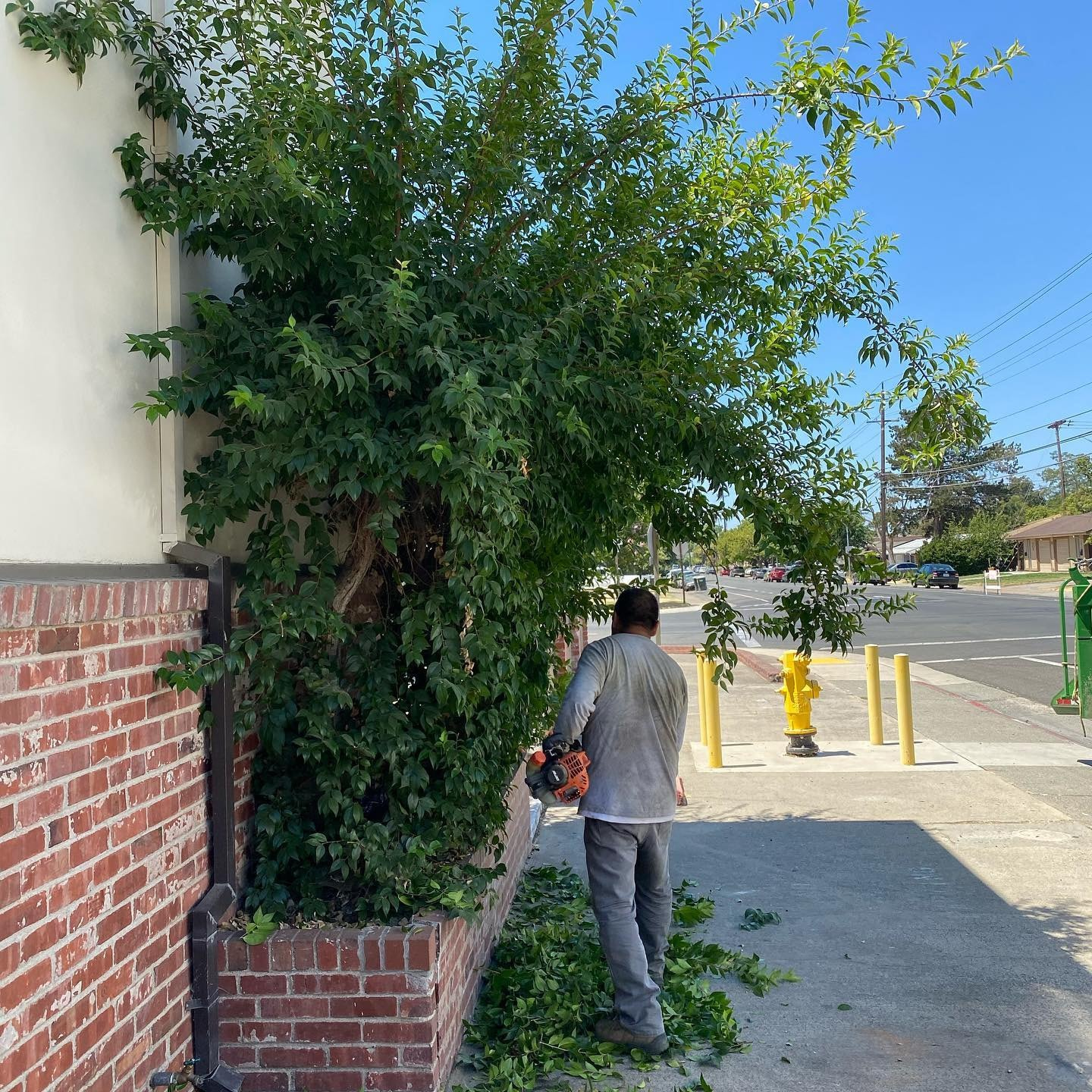
Crown reduction shortens limbs back to healthy side branches so the canopy pulls in while keeping its natural shape. It works well when:
- The problem is a few feet, not half the tree. Pulling limbs back off a roof, away from a second-floor window or back over your own property line is a reasonable job for reduction.
- The species responds well. Many broadleaf trees, including Chinese elm, Chinese pistache, plane trees and most fruit trees, sprout readily from side branches and tolerate reduction.
- The tree is healthy. A vigorous tree with sound wood can replace lost leaves and seal cuts without much trouble.
- You're willing to maintain it. A reduced tree keeps growing. It will need a follow-up visit every few years.
Keep in mind that most mature trees shouldn't lose more than about a quarter of their live canopy in one season. If the tree needs to shrink more than that, reduction can still work, but it'll be spread across a few years. There's also a structural limit: each limb can only come back as far as a side branch big enough to take over. If the only suitable branches are deep inside the crown, the tree can't get as small as you'd like without topping.
When Removal and Replanting Is the Honest Answer
Some trees can't be made to fit, no matter how skilled the pruning. Reduction is usually the wrong tool when:
- The tree would have to be cut back so hard that the only way to do it is topping, which leaves it weaker and more dangerous
- It's a conifer or palm that can't be reduced in height without ruining it
- The roots, not the canopy, are the real problem: lifting a driveway, cracking a foundation or crowding a sewer line
- The tree is already declining, has major decay or has been topped repeatedly
- You'd be paying for heavy pruning every year or two just to hold it where it is
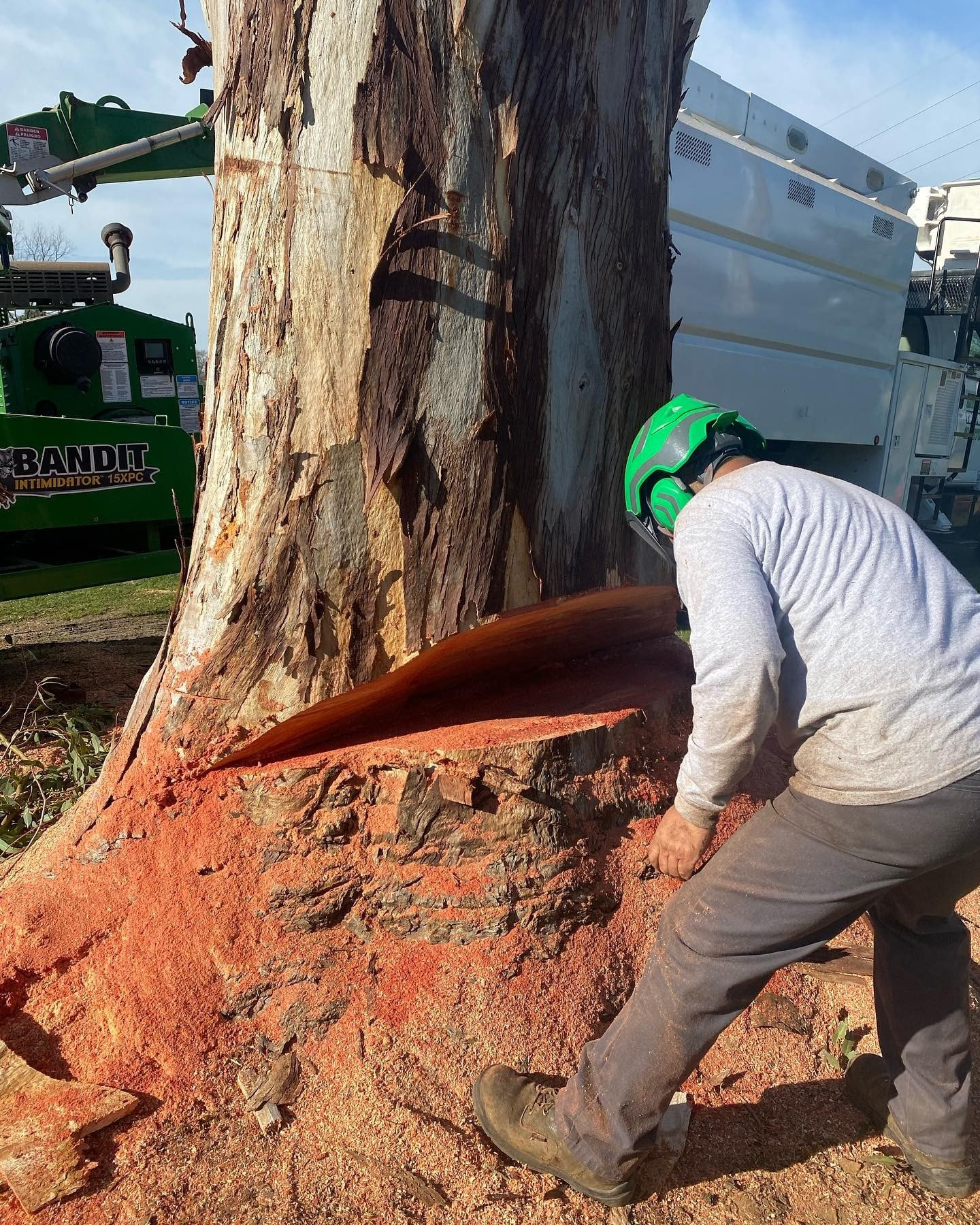
In those cases, removing the tree and starting over with the right species is often kinder to your budget and your yard over the long run. A tree that fits its space at maturity needs only light, occasional pruning. Environmental Tree Service plants a new tree for every tree it removes, at no additional cost to you, so replacing a tree that has outgrown its spot doesn't mean giving up shade for good. For a broader look at the warning signs, see signs a tree should come down and when it can be saved.
Protected Trees
If the tree is a native oak, or a large tree of another species, check with your city or county before removing or heavily pruning it. Many Sacramento-area jurisdictions protect native oaks and some other trees, and the rules differ from one city to the next. Our post on tree removal permits and protected trees in Sacramento explains how to find out what applies to you.
Questions to Help You Decide
Walk out to the tree and work through these in order. If you answer "no" to several of the first four, or "yes" to either of the last two, replacement deserves a serious look:
- Is the tree healthy, with a full canopy and no major decay, cracks or dieback?
- Does the canopy only need to come back a few feet to clear the house, fence or view?
- Is it a broadleaf species that sprouts well from side branches, not a palm or conifer?
- Are you comfortable with a light reduction every few years for as long as you own the home?
- Are roots damaging paving, foundations or pipes?
- Has the tree been topped before, or would it need to be topped to fit?
The answers don't have to be perfect. They give you and your tree service a shared starting point, and they make it easier to judge whether a recommendation fits your situation.
Choosing a Better-Sized Replacement
The fix for a tree that's too big is a tree whose mature size fits the space. Before planting, measure the distance to the house, fences, driveway and any overhead lines, then choose a species whose full-grown spread fits comfortably inside that. For small yards, smaller flowering and ornamental trees such as crape myrtle are common choices, and a Chinese pistache can suit a yard with a bit more room. Look for trees that handle hot, dry summers and clay soil. Our tree planting page covers how we handle new trees.
Planting Where the Old Tree Stood
You can often plant near the old spot, but it helps to shift the new tree a few feet away from the center of the old root mass. After stump grinding, the hole is full of wood chips that break down and settle, so they should be cleared out and replaced with native soil. Our guide on how to replant where a tree used to be goes through the steps.
Keeping a Reduced Tree in Bounds
If reduction is the path you choose, the goal is to hold the tree near its new size with modest, regular work instead of letting it grow out and cutting it back hard again. A few habits help:
- Schedule a light reduction every few years, before limbs reach the roof or fence again.
- Keep each visit small. Taking a little off regularly is easier on the tree than a big cut once a decade.
- Watch for clusters of fast sprouts near old cuts. Thinning them early keeps the tree from getting dense and heavy.
- Don't overwater or overfertilize to make the tree "look healthier." Pushing extra growth just means more to cut later.
- Keep new structures, like patios and additions, out of the root zone where you can.
Get an Honest Recommendation
We'll look at the tree and the space and tell you plainly whether reduction will hold or whether replacing it makes more sense. Call (916) 870-8154 or request a free estimate.