Tree shaping is pruning with an appearance goal, and the term gets used for everything from a light trim to a hedge clipped into a perfect box. This post explains what shaping actually means, how it differs from pruning and topping, the cuts that make it work, and which trees and shrubs are good candidates for it.
Key Points
- Tree shaping is careful pruning done with a visual goal, using the same proper cuts as any good pruning job.
- Most trees should be shaped in their natural form. Clipped formal shapes suit hedges and a few dense shrubs.
- Topping is not shaping. It leaves stubs that decay and regrowth that breaks easily.
- For most mature trees, no more than about a quarter of the live canopy should come off in one season.
- Many conifers, all palms and large native oaks should never be sheared or forced into a shape.
What Tree Shaping Means
Shaping is pruning with an appearance goal. The work still uses the same careful cuts as any good pruning job, but the aim is to control how the plant looks: its outline, its density, its balance from one side to the other, and how it sits in your yard.
For most trees, shaping means refining the form the tree already has. For hedges and some shrubs, it can mean holding a crisp geometric outline with regular shearing. Both fall under tree shaping, but they are very different jobs with very different maintenance needs.
The Cuts Behind Every Shape
Almost all shaping comes down to three kinds of cuts. Knowing them makes it much easier to understand what a crew is proposing for your tree.
- Thinning cuts remove a branch entirely where it starts, just outside the branch collar. They open up a crowded canopy without changing the overall outline much, and they cause the least regrowth.
- Reduction cuts shorten a branch back to a side branch big enough to take over as the new tip. They make a tree smaller or pull in a long limb while keeping a natural look.
- Heading cuts shorten a stem to a bud or leave a stub. On the young shoots of hedges they push dense, bushy growth, which is why shearing works on a hedge. On large tree limbs they trigger clusters of weak sprouts and are best avoided.
A natural-form shaping job is mostly thinning and reduction cuts. Formal hedge and topiary work relies on many small heading cuts made with shears. When a crew describes the work, ask which kind of cuts they plan to use and where.
Tree Shaping vs. Pruning vs. Topping
These three words get mixed up constantly, and the difference matters for the health of your tree. If the everyday terms are confusing, our guide to trimming, pruning, thinning and crown raising sorts out the rest of the vocabulary.
- Pruning removes specific branches for health, structure or safety: dead wood, diseased limbs, crossing branches and weak attachments. It is the foundation of all tree care. Read more about tree pruning.
- Shaping builds on pruning with a visual goal in mind. A shaper decides which branches to keep, which to shorten and which to remove so the tree looks balanced and fits its space, while still cutting at the branch collar or back to a healthy side branch.
- Topping cuts large branches or the main trunk back to stubs at an arbitrary height, with no regard for where the tree would naturally branch. It is not a form of shaping.
Topping does lasting harm. The stubs it leaves decay easily. The tree answers with a flush of fast, dense shoots that are only weakly attached to the stub, so within a few years it is as tall as before and more likely to drop limbs. Removing that much foliage at once also starves the tree and exposes bark to sunburn, which is a real risk in a Sacramento summer. If a tree needs to be smaller, proper tree reduction shortens branches back to side branches large enough to take over, usually at least about a third the diameter of the stem being removed. Our post on crown reduction versus topping covers that difference in more detail.
Natural Form Versus Formal Shapes
Most shaping falls into one of two styles.
Natural-form shaping works with the way a species wants to grow. A spreading tree stays spreading, an upright tree stays upright. The work involves thinning crowded areas, shortening a branch that sticks out too far, raising low limbs for clearance and evening out a lopsided canopy. Done well, the tree looks healthy and tidy, and most people can't tell it was shaped at all. This is the right approach for nearly every shade tree and most ornamental trees.
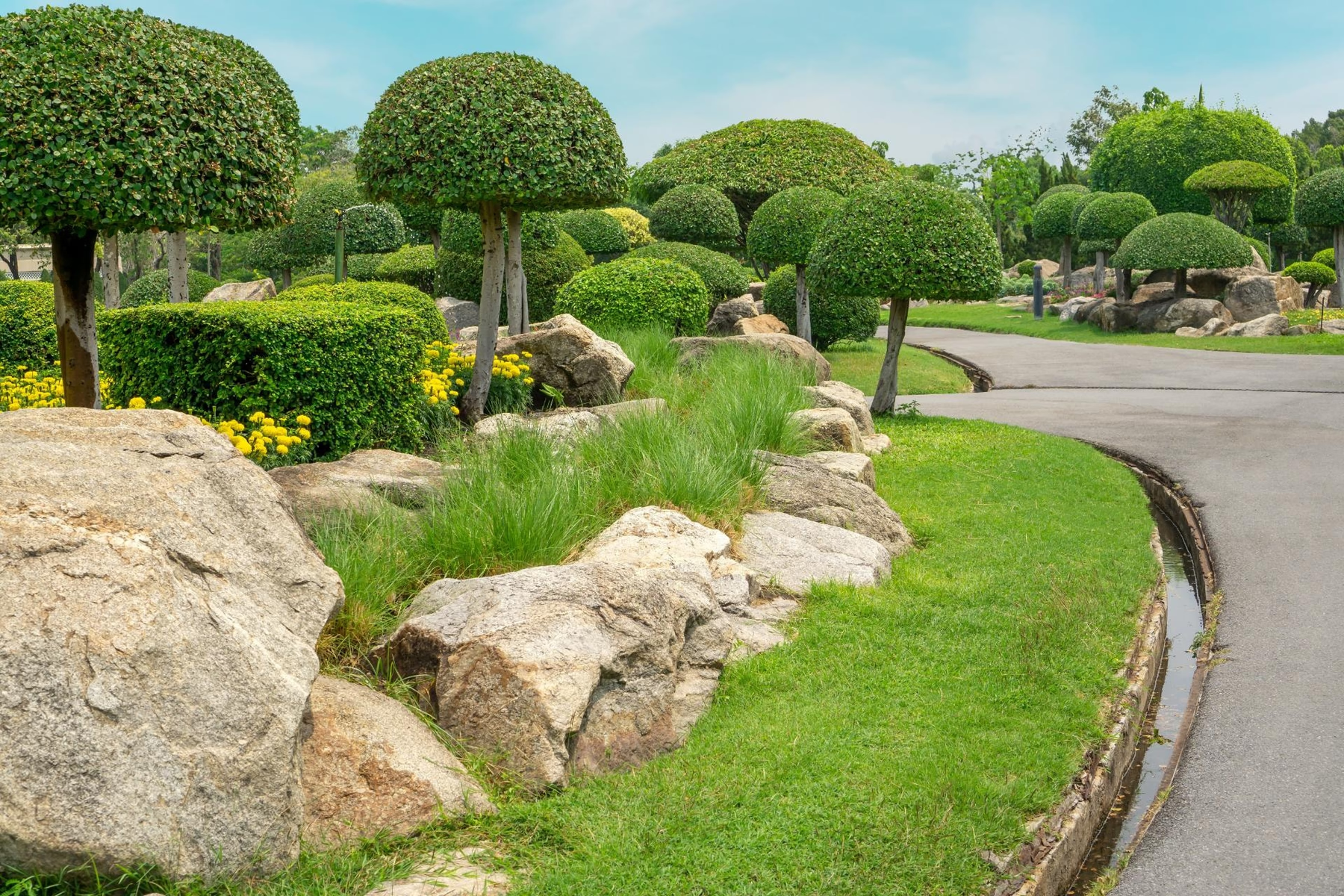
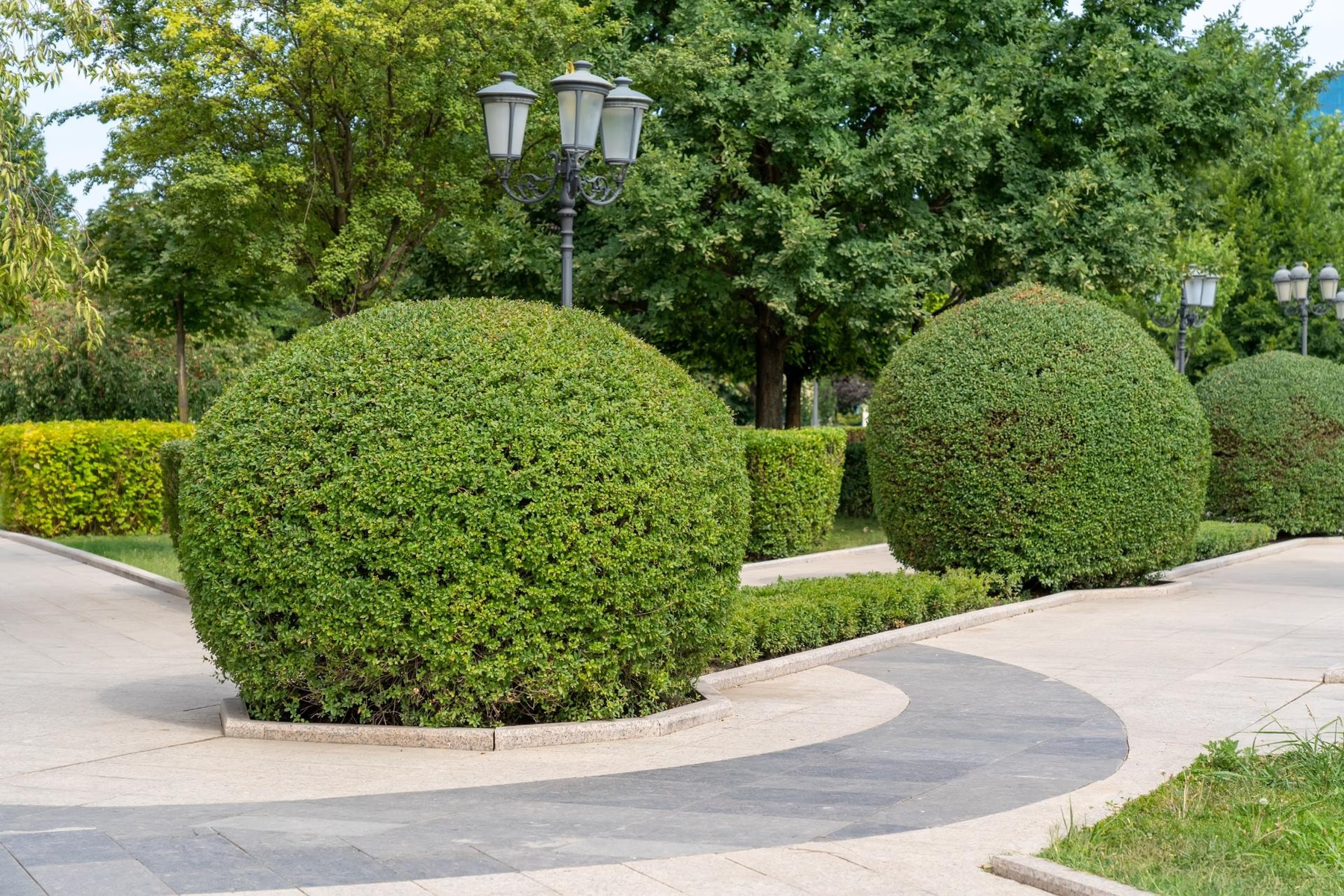
Formal shaping imposes a design on the plant: clipped hedges, globes, cones, cubes, topiary and trained styles like espalier. It depends on repeated shearing or careful training, often several times a year, and the plant has to be one that tolerates constant cutting. A formal shape is a commitment. Once you stop maintaining it, it grows out of shape quickly and can be hard to recover. Our guide to pollarding, espalier and other classic shaping styles explains what each formal style asks of you.
Which Trees and Shrubs Take Shaping Well
Some plants handle shaping easily. Others resist it or are harmed by it.
Good Candidates
- Dense, small-leaved evergreen shrubs that sprout readily from older wood, such as boxwood, privet, pittosporum and podocarpus, are the classic choices for hedges and formal shapes.
- Many ornamental trees, including crape myrtle, Chinese pistache, redbud and olive, respond well to natural-form shaping that thins and balances the canopy.
- Young trees of almost any species benefit from structural shaping that sets up a strong framework early.
Poor Candidates
- Many conifers, including pines and deodar cedar, won't sprout new growth from bare older wood. Cutting back past the green foliage leaves permanent bare patches.
- Large shade trees such as valley oaks and live oaks should never be sheared or forced into formal shapes. Native oaks are also protected in many Sacramento-area cities and in the county, so check with your city or county before heavily pruning one.
- Palms grow from a single bud at the top. There is no shaping a palm beyond removing dead fronds and old flower and fruit stalks.
Why Good Shaping Follows the Tree's Structure
Every species has its own branching habit. Some grow a single dominant leader with smaller side branches. Others split into several large limbs and form a broad, rounded crown. A skilled shaper reads that structure first and then decides where cuts will look natural and seal over well.
Working against the structure is a losing battle. If you force a spreading tree into a narrow column or shear a tree into a ball, it pushes out vigorous new shoots trying to get back to its natural form, and you are stuck cutting them off over and over. Working with the structure gives you a shape that holds, needs less frequent attention and keeps the tree strong.
Good shaping also respects limits. For most mature trees, no more than about a quarter of the live canopy should come off in one season. Bigger changes are spread over several years so the tree keeps enough leaves to feed itself. Cuts are made just outside the branch collar, never flush with the trunk, and wound paint is generally unnecessary.
Signs a Tree Could Use Shaping
Walk around your trees once or twice a year, ideally once in winter when deciduous trees are bare and the branch structure is easy to see. Any of these signs is a good reason to have a tree looked at.
- One side of the canopy is noticeably longer or heavier than the other.
- Branches touch the roof, walls or windows, or hang low over a walkway, driveway or patio.
- The canopy is so dense that little light reaches the lawn or garden underneath.
- Branches cross and rub against each other, wearing through the bark.
- A young tree has two or more stems competing to be the main trunk.
- Clusters of upright shoots are growing from old pruning cuts.
- A hedge has gone thin at the base or spread well past the width you want.
Some problems are not about looks at all. Dead limbs, cracks in the trunk, mushrooms at the base, a new lean or soil lifting on one side call for a health and safety check before anyone thinks about shape.
What You Can Shape Yourself
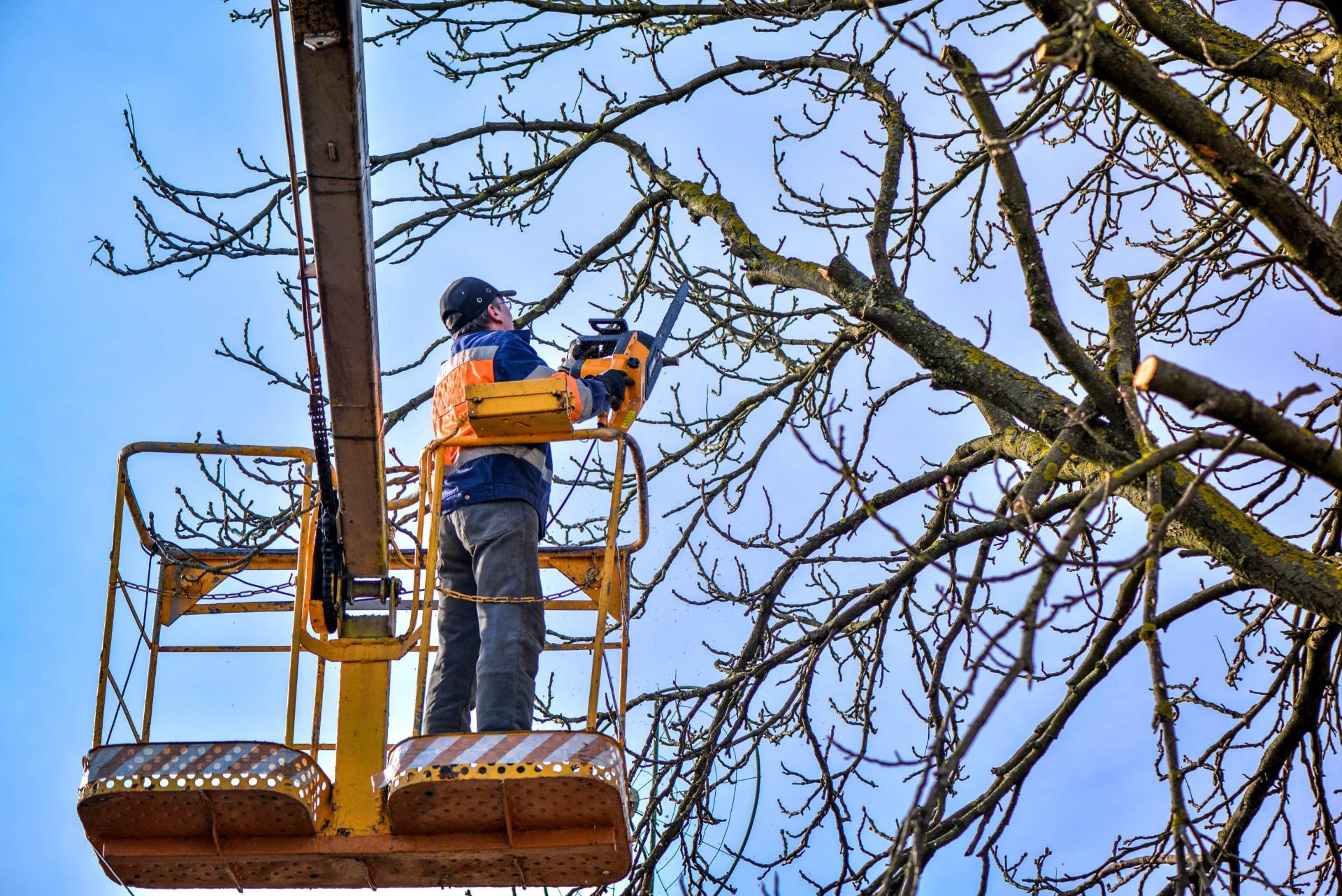
Small jobs you can reach from the ground with sharp hand pruners or loppers, like removing a crossing twig on a young tree or clipping suckers from the base, are reasonable to do yourself. Anything that needs a ladder, a chainsaw or cuts on limbs too thick for loppers is safer left to a crew with the right equipment. Never prune anywhere near power lines. Stay away and call SMUD or PG&E, or a qualified line-clearance contractor.
Get a Free Estimate
If you'd like a tree or hedge shaped the right way, Environmental Tree Service offers free estimates across the Sacramento area. Call (916) 870-8154 or send us a message.