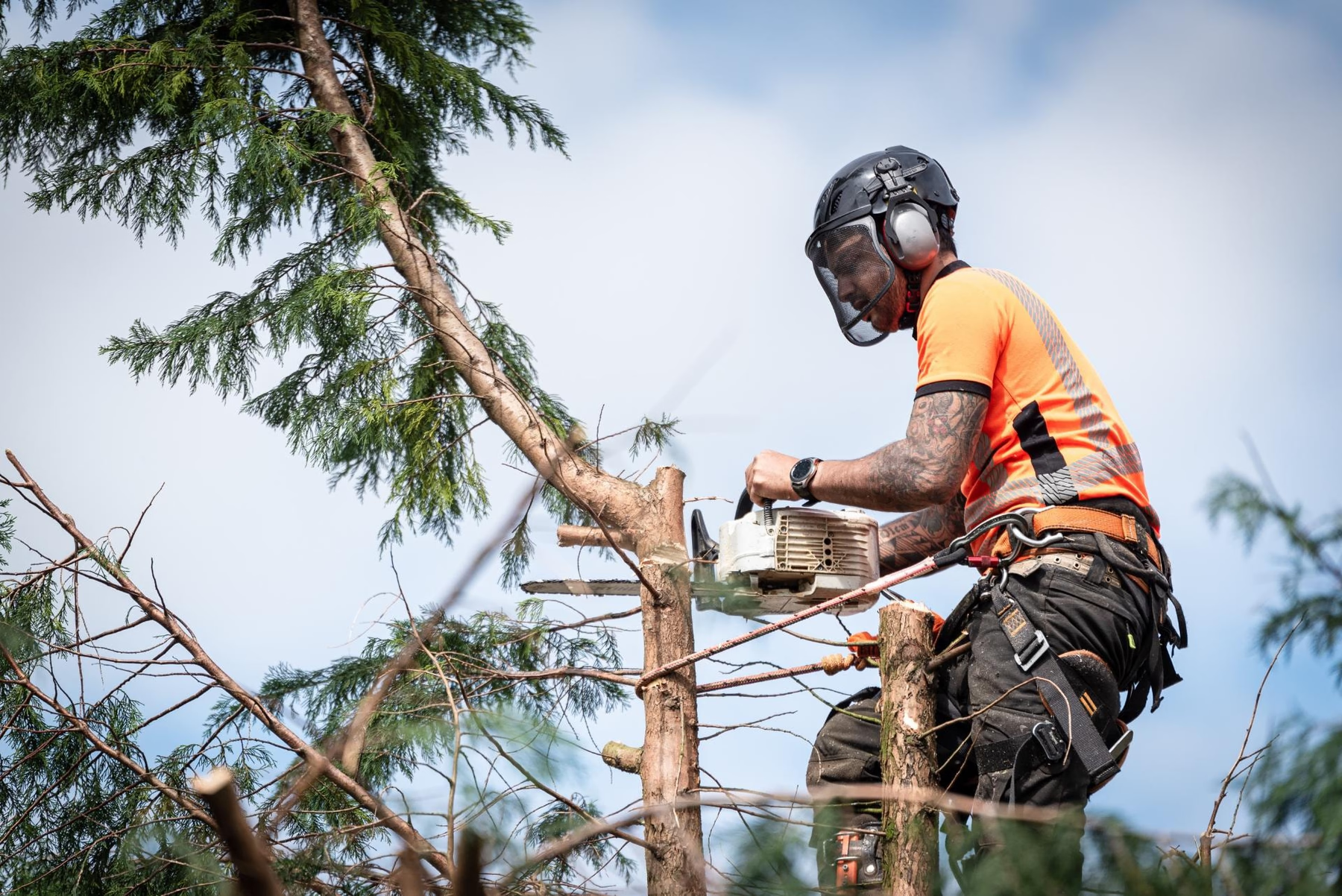
Structural pruning is the light, regular pruning that shapes a young tree's trunk and main limbs during its first five to ten years in the ground. A few small cuts in that window can prevent the split trunks and failed limbs that lead to big repair bills, or removal, decades later. This post explains what to look for, how to fix it, and how to pace the work year by year.
Key Points
- Start after the tree has settled in, usually a year or two after planting, and check it every year or two after that.
- Most shade trees should have one dominant trunk, or central leader. Slow down or remove anything that competes with it.
- Codominant stems and tight V-shaped crotches are the most common structural flaws, and they're easiest to fix while small.
- Choose permanent scaffold limbs gradually, spaced up and around the trunk, and keep lower temporary branches for a few years.
- Keep each session light, and never top a young tree to control its height.
Why Structural Pruning Pays Off
A cut on a young tree is small, the tree closes it quickly, and the branch you remove is one you'll never have to deal with again. Wait twenty years and the same problem may be a limb as thick as your leg, growing from a weak joint over your roof. Fixing it then means a large wound on an older tree, or living with the risk.
Trees tend to fail along weak structure: two trunks of equal size splitting apart, or a heavy limb tearing out of a narrow crotch during a wet, windy Sacramento winter storm. Much of that weakness can be corrected with hand pruners and a small saw while the tree is young. If you're new to the cuts themselves, our tree pruning basics for homeowners covers where and how to cut.
Start With a Single Leader
Most shade trees grow strongest with one dominant trunk, or central leader, running up through the crown. Pick the straightest, most vigorous upright stem as the leader and make sure nothing competes with it.
When another upright stem is growing nearly as fast as the leader, you don't always have to remove it. You can shorten it with a reduction cut back to a side branch, which slows it down and lets the leader pull ahead. Over a few years, the slowed stem becomes an ordinary branch.
If the leader breaks or dies back, choose the strongest nearby upright shoot to replace it and reduce any others that are racing it. A young tree can usually rebuild a good leader within a season or two.
Remove Codominant Stems and Narrow Crotches Early
Codominant stems are two or more trunks of about the same size growing from the same point. Because neither one is in charge, the wood between them never forms a strong connection. As both stems thicken, bark often gets pinched into the joint. This is called included bark, and it leaves a weak seam that can split under wind or the weight of a wet winter canopy.
Watch for these warning signs as the tree grows:
- Two or more upright stems of similar diameter forking from the same spot
- A tight V-shaped crotch with bark folded into it, instead of a raised ridge of bark
- A branch more than about half the diameter of the trunk it grows from
- Several large branches coming out at nearly the same height
Deal with these while the stems are small. Remove the competing stem outright if it's small enough to take cleanly, or reduce it now to slow it down and remove it in a later year.
Space the Scaffold Branches
Scaffold branches are the permanent main limbs that will form the mature crown. On a young tree, you choose them gradually. Good scaffold limbs:
- Are spaced well apart up the trunk, often a foot and a half or more on trees that will grow large, rather than clustered at one height
- Point in different directions around the trunk, so the crown grows balanced
- Stay clearly smaller in diameter than the trunk
- Have wide, U-shaped attachments with a visible branch bark ridge
Temporary Branches
The lowest permanent scaffold should sit high enough to clear whatever will eventually be underneath it, such as a sidewalk, patio or driveway. Branches below that point can stay on as temporary branches for a few years. They shade the trunk, feed it, and help it grow thicker and more tapered. Shorten them if they get too vigorous, then remove them a few at a time as the tree grows. Stripping a young trunk bare all at once leaves it thin, whippy and prone to sunburn.
A Year-by-Year Structural Pruning Plan
Every tree grows at its own pace, so treat this as a rough guide rather than a schedule:
- At planting: remove only broken, dead or badly crossing branches. The tree needs its leaves to grow new roots, and cutting it back to balance the roots is outdated advice.
- The first year or two: let it establish. Water deeply through Sacramento's dry season, keep mulch off the trunk, and do little or no pruning beyond damage.
- Roughly years two to four: pick the leader and slow or remove competing stems. Correct any tight crotches while they're small.
- Roughly years four to seven: begin choosing permanent scaffold limbs. Start removing temporary branches below the lowest scaffold, a few each visit.
- Roughly years seven to ten: finish raising the crown to its final clearance and thin out branches that crowd the chosen scaffolds.
- After that: check every few years, remove deadwood, and deal with new structural problems while they're still small.
In each session, take only a modest amount of live growth, make every cut just outside the branch collar or back to a side branch, and use sharp hand pruners or a small pruning saw. For the right month to do it, see the best time to prune trees in the Sacramento area.
Stakes and Ties
Many new trees don't need stakes at all. If yours does, tie it loosely with a flexible tie low enough on the trunk that the top can still move in the wind, which is what builds trunk strength. Check ties a few times a year so they don't cut into the bark, and remove stakes once the roots can hold the tree upright, usually within the first year or so.
What Not to Do
Don't top a young tree or cut back its leader to control height. If the tree will outgrow its spot, a different species is the real fix. If an older tree has already outgrown its spot, our post on whether to reduce or replace a tree that has outgrown your yard walks through the options.
Species Notes for Sacramento Yards
- Valley oak, live oak, London plane and Chinese elm: these grow large, so a strong leader, well-spaced scaffolds and early codominant correction matter most. Native oaks may be protected, so check with your city or county before heavy pruning even on a younger oak.
- Chinese pistache: young pistaches often grow lopsided or gangly before they fill out, and they respond well to patient structural pruning. Our Chinese pistache page has more on this popular shade tree.
- Crape myrtle and small ornamentals: many are naturally multi-trunked, and that's fine. Choose a few well-spaced trunks, remove the rest while they're small, and skip the single-leader rule.
- Fruit trees: peaches, nectarines and many plums are commonly trained to an open center, while apples and pears often do better with a central or modified leader. The goal is still strong, well-spaced limbs.
- Redwood and deodar cedar: these form a strong single leader on their own. Protect it, remove any competing tops early, and otherwise prune very little.
If you're still choosing a tree, our tree planting service can help match the right species to the space. If you're replanting where an old tree stood, see how to replant where a tree used to be.
Get a Free Estimate
For young trees already in the ground, a professional pruning visit can set their structure on the right path. Call (916) 870-8154 or contact us for a free estimate.