How do you know if a tree needs to be removed? This guide covers the warning signs that usually mean a tree has to come down, the problems that look serious but can often be fixed, and how to weigh the decision for a tree in your own Sacramento-area yard.
Key Points
- A dead tree, a deep crack into the trunk wood, decay fungi at the base or a new lean with lifting soil usually means removal.
- A thin canopy, a few dead branches or a lean the tree has had for years can often be handled with pruning, reduction or better care.
- What the tree could hit matters as much as its condition. The same defect is a bigger problem over a bedroom than in a back corner.
- Native oaks and other protected trees need a check with your city or county before removal or heavy pruning.
- If a tree matters to you and you're unsure, get a professional inspection before you decide.
Clear Signs a Tree Needs to Be Removed
Some trees give you an obvious answer. Others need a closer look. These are the conditions that most often end in removal:
- Dead or dying: no leaves in spring across most of the crown, bark falling off in sheets, or twigs that snap instead of bend. Dead wood gets more brittle every season, which makes the tree harder and riskier to take down later.
- Major trunk cracks or cavities: a deep crack that runs into the wood, a seam that opens and closes in the wind, or a hollow that takes up much of the trunk.
- Fungal conks at the base: shelf-like or mushroom growths on the lower trunk or root flare usually mean decay inside the roots or trunk, where you can't see how far it has spread.
- A sudden lean: a tree that has leaned for years has usually adjusted to it. A new lean, especially with cracked or lifting soil on the opposite side, means the roots are letting go.
- Root damage: trenching, a new foundation or driveway, or a grade change that cuts major roots close to the trunk can leave a tree unstable even while the canopy still looks green.
- Repeated large limb failures: one broken limb in a storm can be bad luck. Several large limbs dropping over a few seasons points to a structural or decay problem.
One sign alone isn't always the end. A single fungal conk on a small branch stub is very different from a ring of them around the root flare. What matters is where the defect is, how much of the tree's structure it affects and whether it's getting worse.
How to Inspect a Tree Yourself
You can learn a lot with a slow walk around the tree. Pick a clear day, bring your phone for photos and work through these steps:
- Stand back first. Look at the whole tree from a distance on two sides. Compare its leaf density with healthy trees of the same kind nearby, and check old photos to see whether the lean or the shape has changed.
- Check the root flare. A healthy trunk widens where it meets the ground. Look for mushrooms, soft or missing bark, soil cracking or heaving on one side, or roots wrapping tightly around the trunk.
- Walk around the trunk. Look for cracks that go into the wood, cavities, oozing, large patches of missing bark and fine sawdust-like material at the base, which can signal decay or boring insects.
- Look up at the unions. Where large limbs meet the trunk, a tight V with bark pinched between the stems is weaker than a U-shaped union. A crack running down from a union is a serious warning.
- Scan for hangers. Broken limbs caught in the crown can fall at any time, especially in wind.
- Note what's underneath. List the house, cars, fences, play areas, walkways and power lines within reach of the tree.
- Date your photos. Pictures taken once or twice a year make it much easier to spot a lean, crack or dieback that is getting worse.
Some problems can't be seen from the ground. Decay can hollow out a trunk that looks solid, and cracks high in the crown are easy to miss. A professional can sound the trunk with a mallet, probe cavities and look closely at the upper canopy from a climbing line or bucket truck.
The Wrong Tree in the Wrong Place
Sometimes a healthy tree is still the wrong fit. A redwood planted a few feet from the house, a Modesto ash lifting the driveway, or a large tree crowding a foundation will keep causing trouble as it grows. You can prune around the conflict for a while, but you're managing a problem that only gets bigger. Removing it and planting a species that suits the spot is often the better long-term call.
Think about the tree's mature size, not just its size today. A young tree under the eaves or next to a sewer line is far easier and cheaper to deal with now than in fifteen years.
If the tree is growing into power lines, don't try to prune or remove it yourself. Utilities such as SMUD and PG&E handle clearance around their lines, so stay away and call the utility or a qualified line-clearance contractor first.
Local Conditions That Raise the Stakes
Sacramento Valley weather makes some of these problems worse. Winter storms bring wind and soaked clay soil at the same time, and saturated clay holds roots poorly, so a tree with root decay or a new lean is most likely to fail then. Long, hot, dry summers put extra stress on trees that are already in decline, and some species, including many oaks and elms, can drop large limbs on calm summer days with little warning.
Watering habits matter too. Native oaks are adapted to dry summers, and regular lawn irrigation close to an established oak's trunk can encourage root disease. If an older oak has started to decline after a lawn or garden was put in around it, mention that when you have it inspected. If a large tree has defects but you're not ready to remove it, reducing its weight ahead of the rainy season can help. Our guide to reducing storm risk in large trees before winter explains how.
When a Tree That Looks Bad Can Be Saved
Plenty of trees look alarming and turn out to be fine, or fixable. Before you decide on removal, consider these:
- A thin or ragged canopy after a dry summer or a hard winter is often stress, not death. Scratch a twig with your thumbnail. Green tissue underneath means it's alive.
- A few dead branches can be taken out with careful tree pruning, cutting just outside the branch collar so the tree can seal the wound on its own.
- An overgrown or lopsided crown can often be brought back into balance with tree reduction, which shortens limbs back to healthy side branches instead of topping them.
- Shallow cracks in the bark are normal as a trunk grows. The cracks to worry about are the ones that go into the wood.
- A long-established lean with a solid root flare and a crown that has grown to balance it is often stable.
A tree that matters to you, or a native oak such as a valley oak, deserves a professional look before any decision is made. Many Sacramento-area cities and the county protect native oaks, so check with your city or county before removing or heavily pruning one. Our post on tree removal permits and protected trees covers how to find out.
Weighing the Decision
When the answer isn't obvious, it helps to weigh a few things side by side:
- Target: what would the tree or its largest limbs hit if they failed, and how often are people there?
- Extent: is the problem in one limb that can be removed, or in the trunk and roots that hold everything up?
- Trend: is the tree stable year to year, or is the crack, lean or dieback getting worse?
- Value: a large shade tree on the west side of a house keeps it cooler through Sacramento summers, and a replacement takes years to catch up.
- Ongoing cost: a tree that needs heavy pruning every year to stay safe may cost more to keep than to replace.
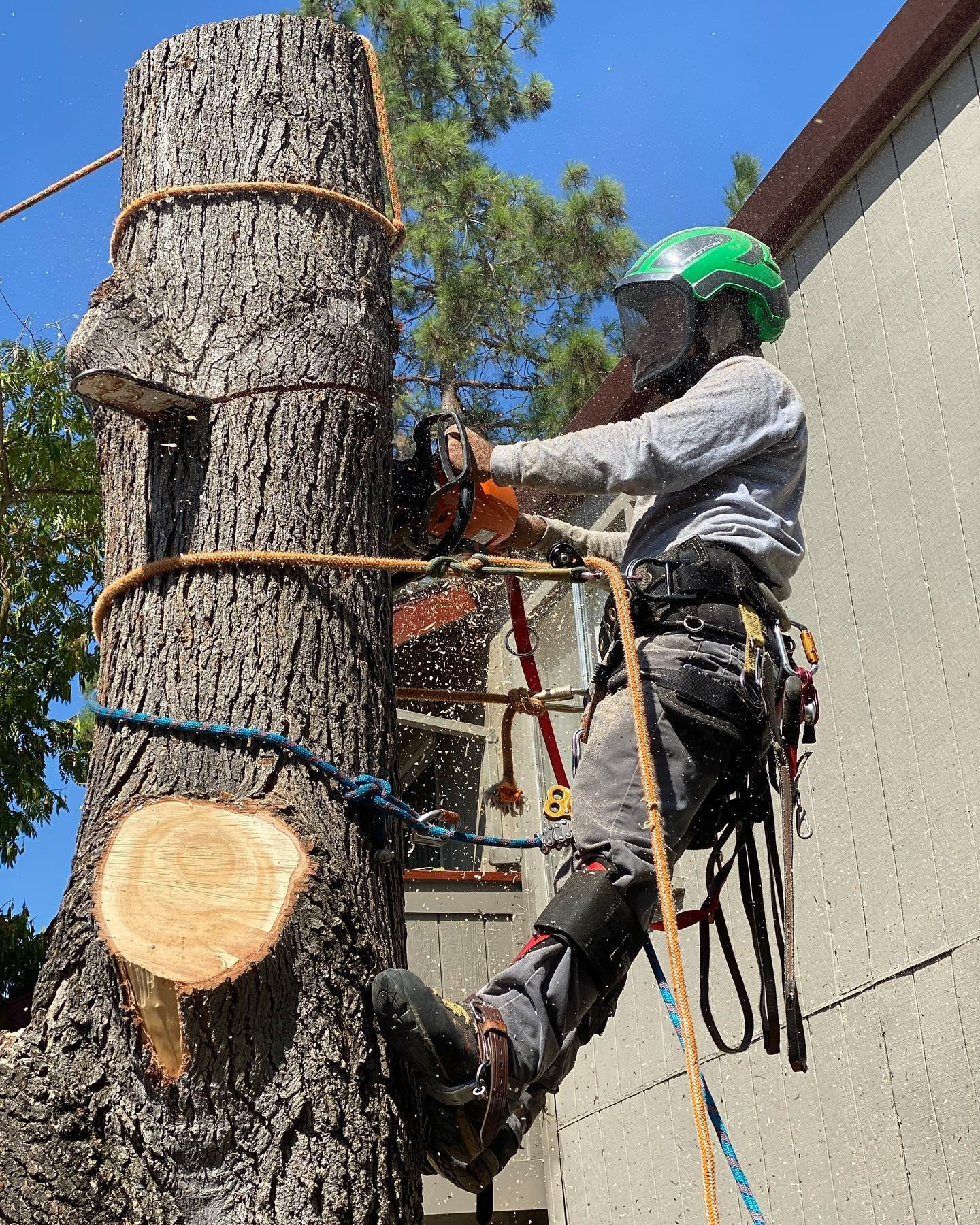
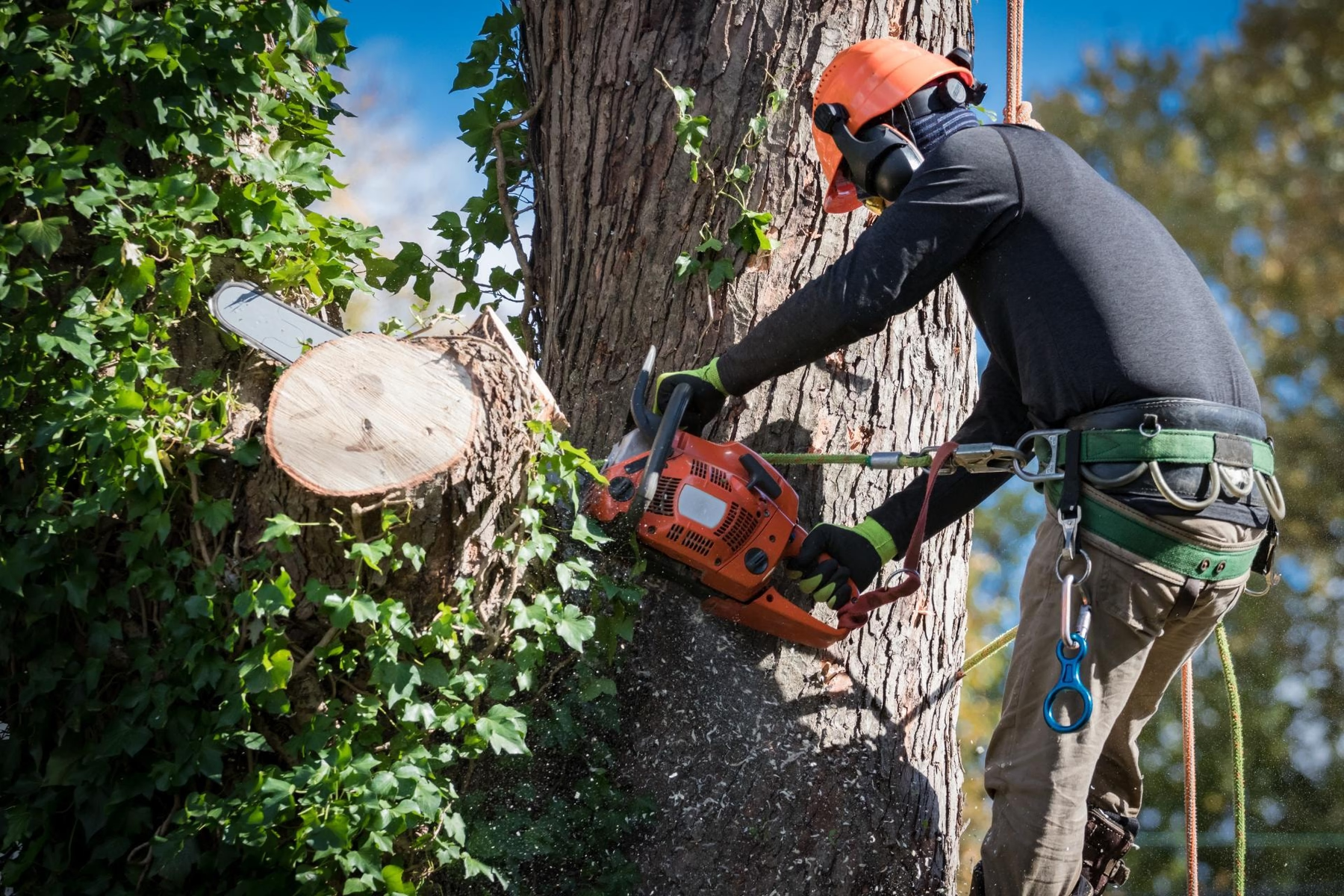
If removal is the right answer, sooner is usually better than later. A tree that dies and dries out becomes more brittle and less predictable to climb and rig, and a job that could have been done with ropes may end up needing a crane. When you're ready, our post on what to expect on tree removal day walks through the process. Environmental Tree Service also plants a new tree for every tree it removes, at no additional cost, so you can put the right tree in the right spot.
Get a Free Estimate
If you're not sure whether a tree should stay or go, Environmental Tree Service offers free estimates across the Sacramento area. Call (916) 870-8154 or send us a message to set up a visit.