Leaving a tree stump in the yard after a removal can seem like the easy part to ignore, but it isn't always harmless. This post explains the problems an old stump can cause over time, how to check one yourself, and the situations where leaving it in place is a perfectly reasonable choice.
Key Points
- Many broadleaf trees keep sending up sprouts from the stump and roots for years after the trunk is cut.
- A rotting stump gives termites, carpenter ants and root-rot fungi a place to live, which matters most near the house or other trees.
- Stumps are trip hazards and mower hazards, and they take up space you could use for lawn, beds or a new tree.
- A stump in a back corner, from a species that doesn't resprout, with no sign of disease, can often be left alone.
- Grinding the stump below the soil line solves most of these problems in a single visit.
Sprouts and Suckers Keep Coming Back
Many broadleaf trees don't give up when the trunk is cut. The roots still hold stored energy, and they use it to push out new shoots, either from the edge of the stump or from roots running under the lawn. Elms, ash, plums, poplars and willows commonly do this, and coast redwood is famous for sending up a ring of sprouts around its old stump.
The result is a thicket of fast, whippy growth you have to cut back again and again. Left alone, those sprouts can turn into a crowded clump of weakly attached stems that is harder to deal with than the original stump. Sprouts that come up next to a fence or foundation can also grow into the structure before anyone notices.
Conifers such as pines and deodar cedar generally don't resprout, so with those trees the stump is mostly a question of space and decay rather than regrowth. If you're not sure how your tree will behave, watch the stump through its first spring and summer. A tree that is going to sprout usually shows it in that first growing season.
Watch the lawn as well as the stump. Species that sucker from their roots can send up shoots many feet from where the trunk stood, and those shoots often look like weeds or seedlings at first. If small saplings of the same kind keep appearing in a line across the yard, they're almost certainly coming from the old root system rather than from seed, and mowing or cutting them back is the fix.
A Decaying Stump Invites Insects and Fungi
A dead stump is a slowly rotting block of wood sitting in contact with moist soil, which is exactly what many insects and fungi look for. Some of that decay is healthy and natural. The trouble comes from what the stump attracts and where it sits.
Termites, Carpenter Ants and Beetles
In the Sacramento area, subterranean termites are the main concern, along with carpenter ants and wood-boring beetles. A stump out in the middle of the lawn isn't a direct threat to your house. One close to a foundation, deck, shed or wooden fence, though, gives those insects a comfortable base right next to wood you care about. Signs to look for include pencil-width mud tubes on the stump or nearby surfaces, soft wood that crumbles easily, and piles of fine, sawdust-like debris.
Oak Root Fungus and Other Root Rots
Mushrooms around an old stump are simply a sign of decay, which is expected. The bigger concern is root-rotting fungi such as Armillaria, often called oak root fungus in California. It can live on in a stump and its roots for years and spread through the soil to nearby trees and shrubs. If the tree that came down was killed by a root disease, dealing with the stump matters more, not less, and so does choosing what you plant nearby afterward.
Trip Hazards, Mower Damage and Lost Space
Even a stump that never sprouts or rots quickly still gets in the way. The everyday problems tend to be the ones people notice most:
- Trips and falls: A low stump hidden in tall grass or ground cover is easy to walk into, especially for kids, guests and anyone carrying something.
- Mower and trimmer damage: Blades that hit a stump can bend, chip or throw debris, and mowing around one leaves a ragged patch every week.
- Wasted space: The stump and its surface roots take up room you could use for lawn, a garden bed, a path or a new tree.
- Liability on shared property: On rentals, commercial lots and HOA common areas, a stump beside a walkway is one more hazard someone has to manage.
- An unfinished look: A stump can make an otherwise well-kept yard look like a job left halfway done, which matters if you're getting ready to sell.
How Long a Stump Takes to Rot on Its Own
A common question is whether you can just wait for a stump to disappear. You can, but it usually takes years, and a large hardwood stump can hang on for a very long time. How fast it breaks down depends on a few things:
- Wood type: Dense woods like oak resist decay far longer than soft woods like poplar, willow or many fruit trees.
- Size: A small stump from a young tree breaks down much sooner than a wide trunk with thick buttress roots.
- Moisture: Decay organisms need water. A stump in a watered lawn rots faster than one sitting in dry, baked clay through a long valley summer.
- Whether it's still alive: A stump that keeps sprouting is still feeding its roots and won't really start to decay until the sprouting stops.
During those years the stump goes through its most problematic stage: soft enough to host insects and fungi, but still solid enough to trip over and mow around.
When Leaving a Stump Is Fine
A stump isn't always worth removing. It can be reasonable to leave it when:
- It sits in a back corner, wooded area or natural part of the property where no one walks or mows.
- The tree was a species that doesn't resprout, and there was no sign of root rot.
- It is well away from the house, decks, fences and other trees you want to keep.
- You'd like it as a feature: a rustic seat, a base for a planter, or habitat for birds and beneficial insects.
- It is so close to a foundation, wall or buried line that grinding would risk more damage than it prevents. In that case, cutting it as low as practical and keeping an eye on it can be the better call.
How to Check a Stump You're Keeping
If you decide to leave a stump, a quick look a few times a year keeps small problems from becoming big ones:
- Cut off any sprouts at the base as soon as they appear, so the roots can't rebuild their energy reserves.
- Look for mud tubes, crumbling wood and sawdust-like debris, especially if the stump is near a structure.
- Check nearby trees and shrubs for thinning canopies, dieback or clusters of honey-colored mushrooms at their base, which can point to a spreading root rot.
- Mark the stump with a stake or ring of mulch if it's low enough to disappear in grass.
- Revisit the decision if you change how you use that part of the yard.
Why Grinding Is the Usual Fix for a Tree Stump
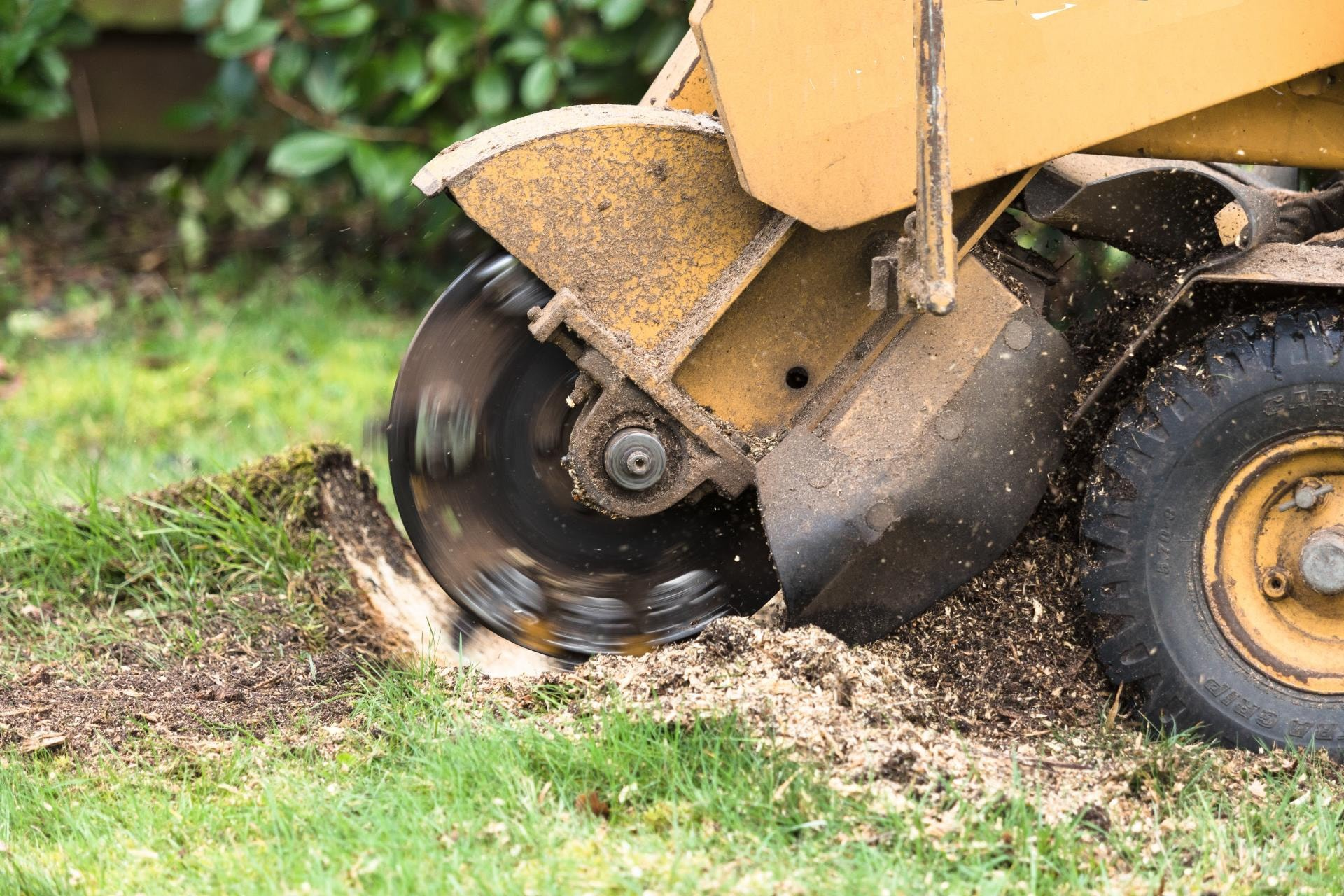
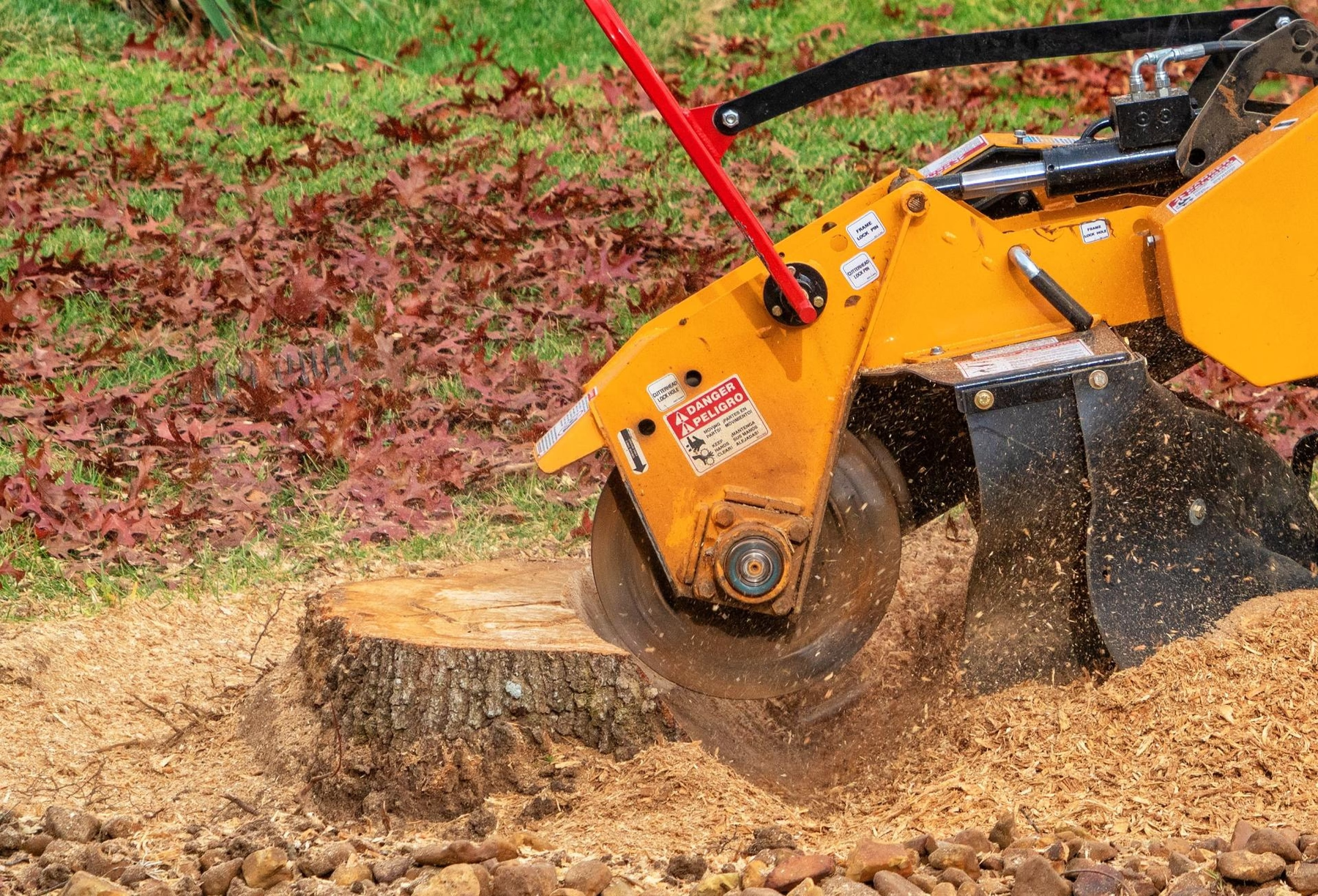
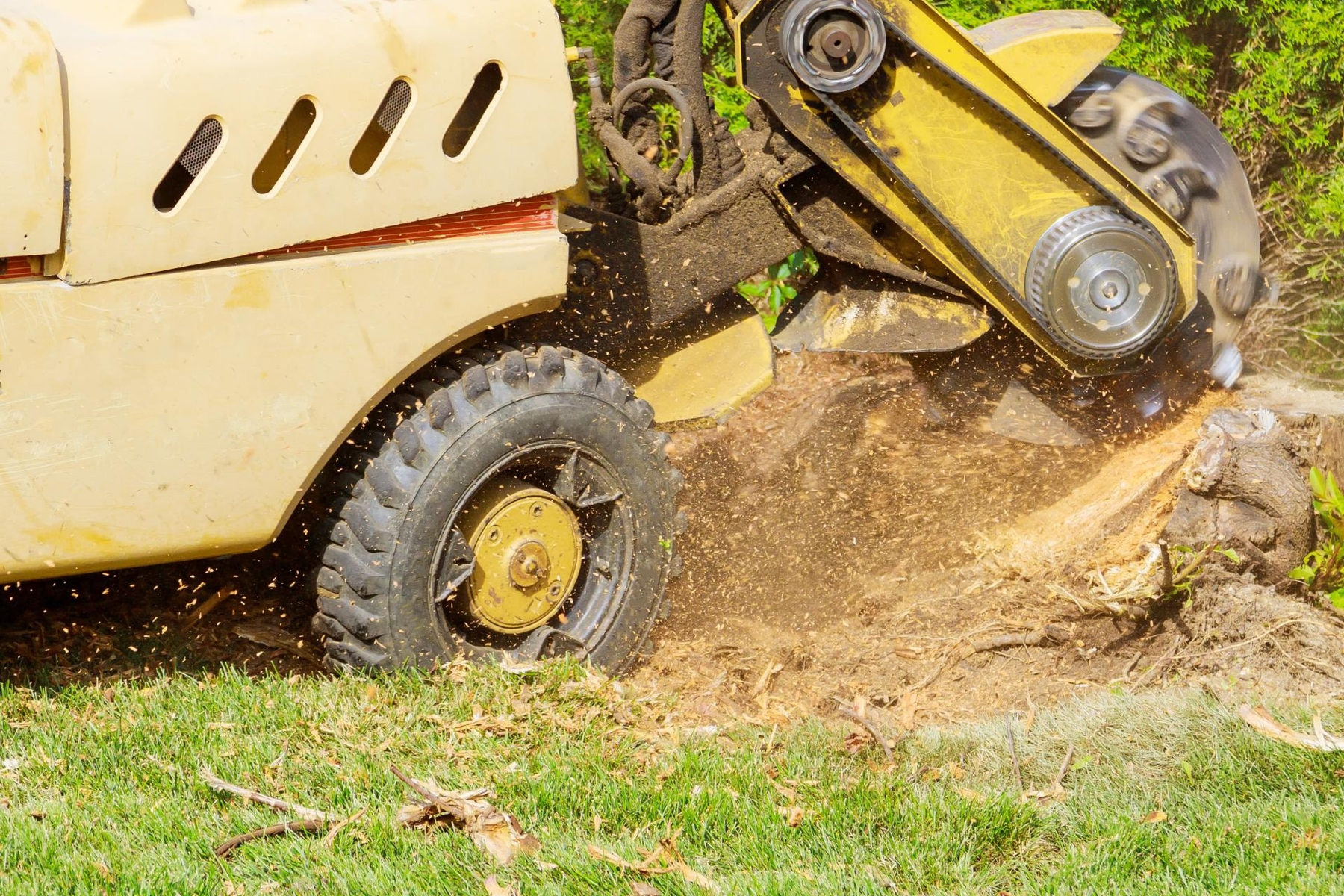
For most yards, the practical fix is stump grinding. A grinder chews the stump down below the soil line, which removes the trip hazard, the insect habitat and the stump that most sprouts come from, all in one visit. What's left is ground you can cover with lawn or plant nearby. If you're weighing it against digging the stump out or using a chemical remover, our comparison of stump grinding, stump removal and other methods walks through the trade-offs, and our guide to how deep grinding goes and what happens to the roots explains what stays underground.
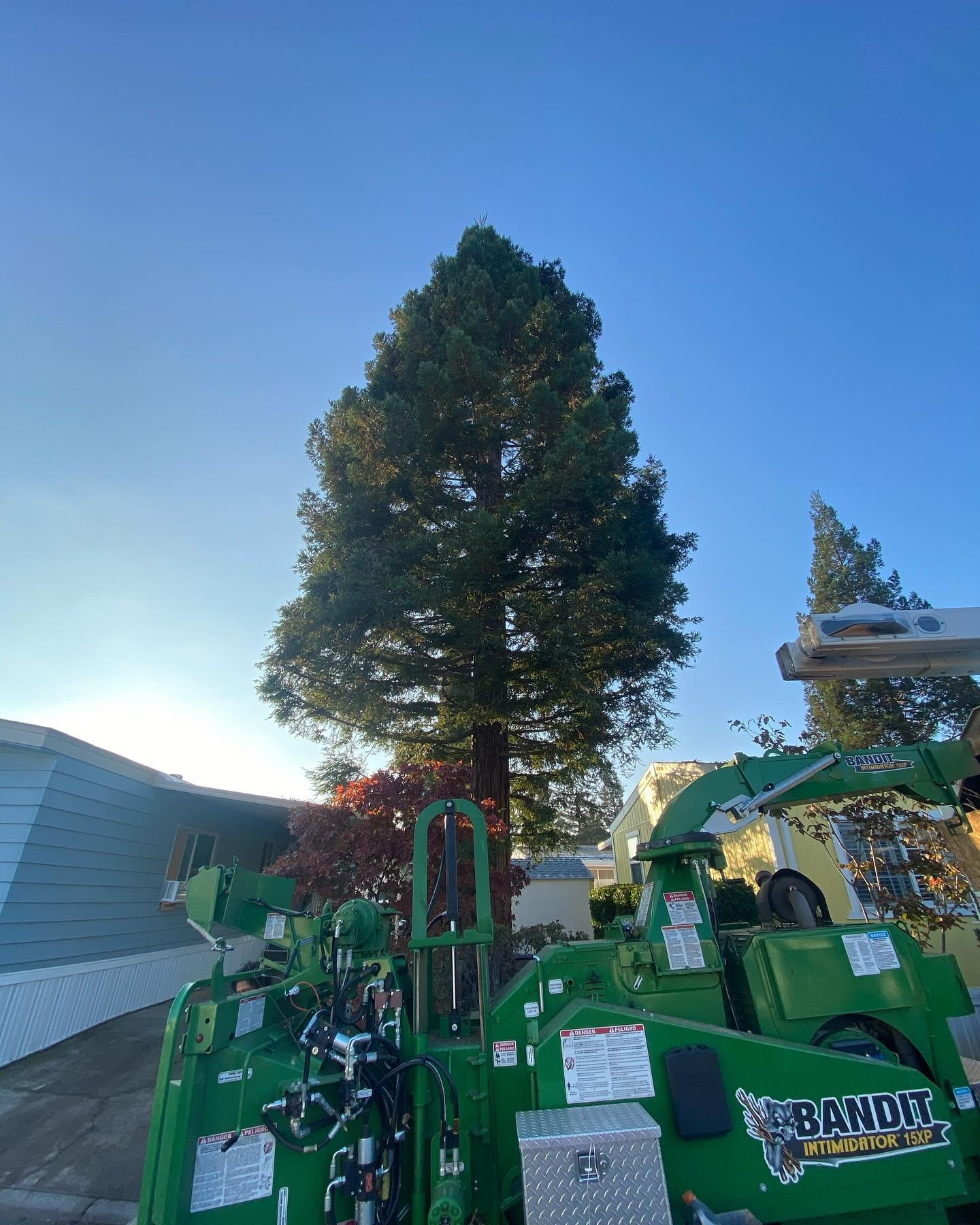
If the tree is still standing, it's usually simplest to have the stump ground as part of the tree removal so you're not living with it afterward. Our post on what to expect on tree removal day covers how that fits into the rest of the job.
Get a Free Estimate
If a stump in your yard is sprouting, rotting or just in the way, Environmental Tree Service can take a look and give you a free estimate. Call (916) 870-8154 or send us a message.