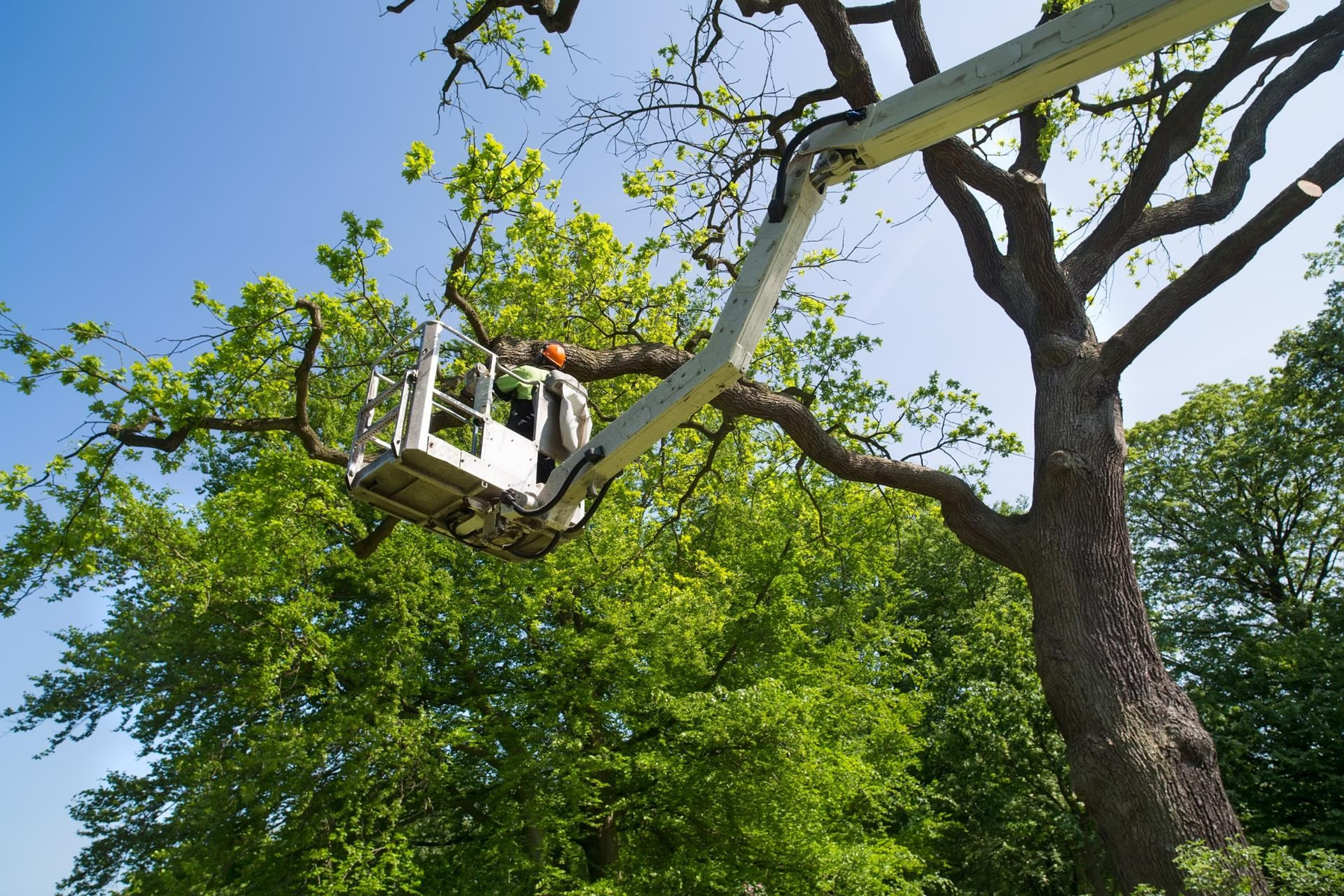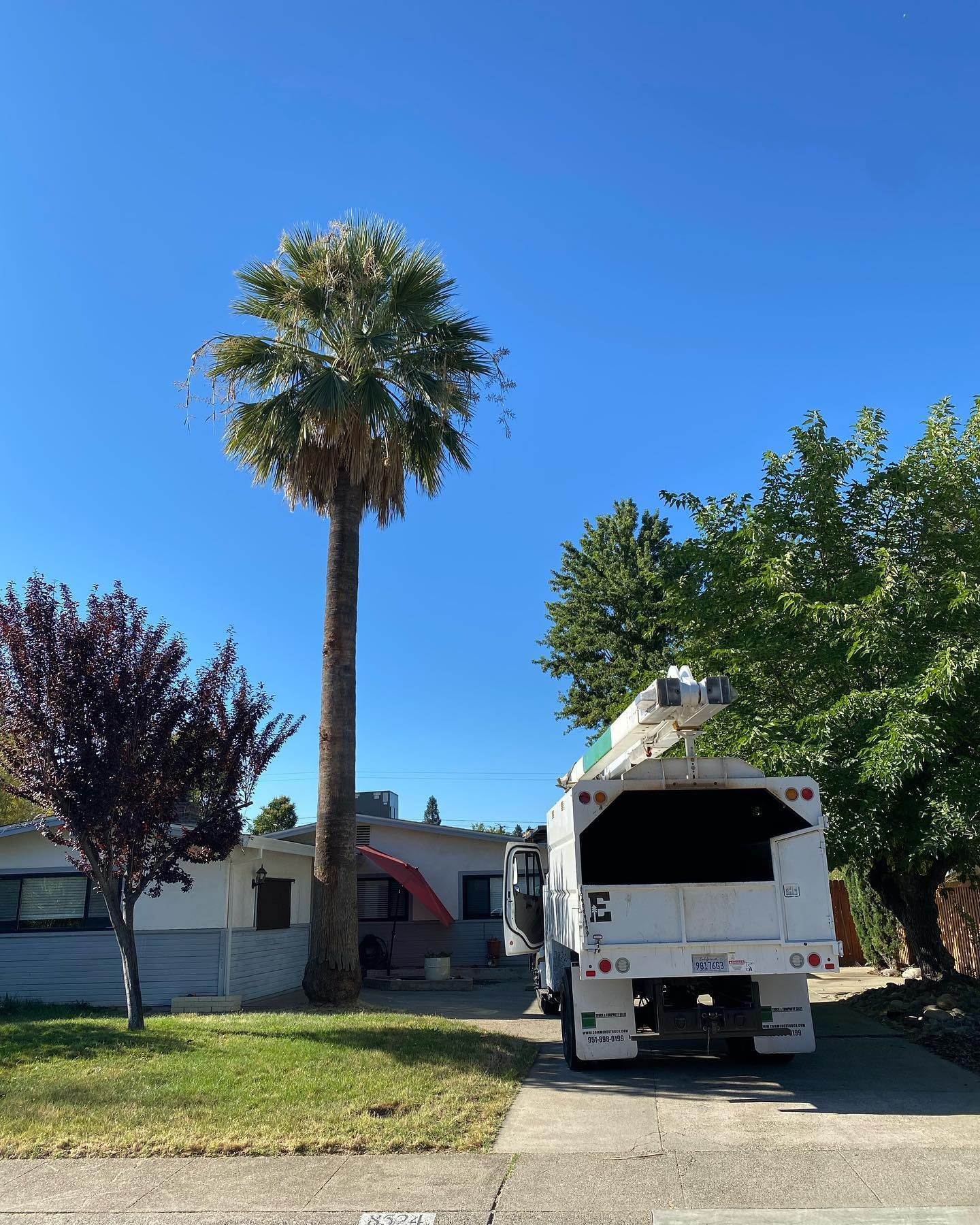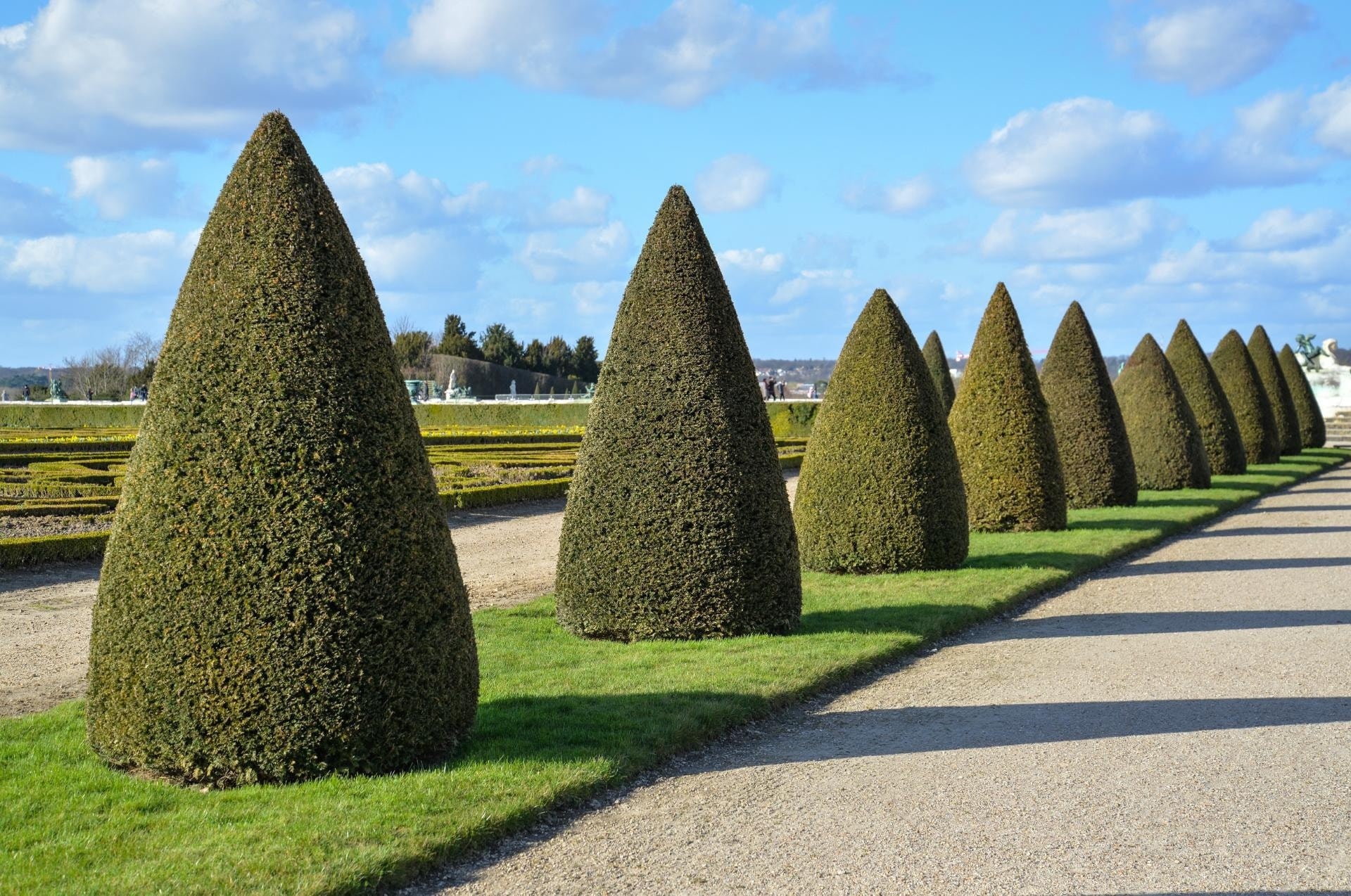
Most tree pruning mistakes come from a short list of well-known errors, many of them made with good intentions. This post walks through the common ones, why each hurts the tree, and what to do instead. It also covers how to help a tree that has already been pruned badly, and what to ask before you hire someone to prune yours.
Key Points
- Topping, lion-tailing and crape murder weaken trees and usually make them more hazardous, not less.
- Cut just outside the branch collar. Flush cuts and stubs both invite decay.
- Remove no more than about a quarter of the live canopy in a season on most mature trees, and avoid heavy cuts in summer heat.
- A badly pruned tree can often be restored, but it takes several years of careful follow-up.
- Ask any tree service how they'll make the cuts and how much they'll remove before the work starts.
Pruning Mistakes That Weaken the Whole Tree
Topping
- What it is: cutting the main stems back to stubs to make a tree shorter, with no regard for side branches.
- Why it hurts: it strips a huge amount of leaf area at once, leaves large stubs that decay, and triggers dense clusters of fast shoots anchored only in the outer wood. Those shoots grow back quickly and break easily, so a topped tree often ends up taller, weaker and more hazardous within a few years.
- Instead: lower height with reduction cuts back to side branches at least about a third the diameter of the removed stem. Our post on crown reduction vs. topping explains the difference in detail. If a tree is truly too big for its spot, removal and replanting may be the better answer.
Crape Murder
- What it is: cutting every crape myrtle branch back to the same thick stubs each winter. It's topping applied to one of Sacramento's most common small trees.
- Why it hurts: it creates knobby knuckles at the cuts, produces long whippy shoots that can bend under their flower clusters, and ruins the smooth, sculptural trunks that make the tree attractive. It isn't needed for flowers, since crape myrtles bloom on new growth either way.
- Instead: in late winter, remove suckers, crossing branches and small twiggy growth, cutting back to a side branch or the branch's point of origin. If the tree keeps outgrowing its space, a smaller variety may suit it better. Our crape myrtle page has more detail.
Lion-Tailing
- What it is: stripping the inner branches and foliage along a limb so leaves remain only in a tuft at the end.
- Why it hurts: it shifts weight to the ends of limbs, which increases leverage in wind, and removes the inner leaves that feed the limb. Bare limbs also sunburn and sprout.
- Instead: keep foliage spread evenly along each limb, from the inside out to the tip.
Over-Thinning
- What it is: removing too many interior branches to open up a tree or cut its wind resistance.
- Why it hurts: fewer leaves means less food, the remaining branches flex more in wind, and the tree often responds with water sprouts that make the crown denser than before.
- Instead: thin lightly. Remove dead, crossing, rubbing and poorly placed branches, and stop well before the crown looks sparse.
Cutting Technique Mistakes
Flush Cuts
- What it is: cutting a branch off tight against the trunk.
- Why it hurts: it removes the branch collar, where the tree's natural defenses are concentrated, and leaves a larger wound that opens straight into trunk wood. Decay spreads more easily and the wound closes poorly.
- Instead: cut just outside the collar, the slightly swollen ring at the base of the branch, angled away from the ridge of bark in the crotch.
Leaving Stubs
- What it is: leaving a length of branch beyond the collar, or cutting partway along a limb with no side branch to take over.
- Why it hurts: the tree can't close over a stub. It dies back, rots, gives decay a path into the tree and often sprouts weak shoots around its end.
- Instead: cut back to the collar, or use a reduction cut to a living side branch.
Tearing the Bark
Sawing a heavy limb off in one cut lets its weight rip it free before the saw finishes, peeling a strip of bark down the trunk that's far bigger than the cut itself. Use three cuts instead: an undercut a foot or so out, a top cut a little farther out to drop the limb, then a final cut at the collar to remove the stub.
Dull Tools, Dirty Tools and Wound Paint
Dull blades and anvil pruners crush and tear living wood instead of slicing it, leaving a ragged wound that seals slowly. Tools that go straight from a diseased tree to a healthy one can carry the problem with them, so clean blades between trees. And skip the wound paint: for ordinary pruning it doesn't stop decay and can hold moisture against the cut. Our post on how trees respond to pruning cuts explains why.
Pruning Too Much or at the Wrong Time
Removing Too Much at Once
- What it is: taking a big share of the live canopy in one visit to save a trip later.
- Why it hurts: the tree loses its food supply, and stored energy goes to replacing leaves instead of roots and defense. Stress, sprouting, sunburned bark and, on older trees, gradual decline can follow.
- Instead: remove no more than about a quarter of the live canopy in a season on most mature trees, less on old or stressed ones, and spread big corrections over several years.
Pruning at the Wrong Time
- What it is: heavy pruning during a Sacramento heat wave, cutting spring-flowering trees in winter, or pruning a species when its main disease risk is highest.
- Why it hurts: a heat-stressed tree has little energy to seal wounds, spring bloomers lose their flower buds, and some fungal diseases enter fresh cuts during rainy weather.
- Instead: do most structural work in the dormant season, prune spring bloomers right after flowering, avoid heavy cuts in summer heat, and remove dead or hazardous limbs whenever they appear. Our guide to the best time to prune trees in the Sacramento area goes tree by tree.
Safety Mistakes Homeowners Make
Some pruning mistakes hurt people rather than trees. Avoid these:
- Working anywhere near a power line. Stay well clear and call SMUD, PG&E or a qualified line-clearance contractor.
- Running a chainsaw from a ladder, or using any saw above shoulder height from one.
- Cutting a limb without checking where it will land, or which way it will swing as it goes.
- Pruning a tree that has cracks, a hanging limb or a lean that has changed, all of which can shift without warning.
- Heavily pruning a native oak without checking with your city or county first, since many Sacramento-area cities and the county protect them.
How to Fix a Tree That Was Pruned Badly
Many badly pruned trees can be brought back, though it takes patience. The first rule is not to make things worse by cutting hard again. A topped or over-thinned tree will usually push out a thicket of water sprouts. Rather than shearing them all off, which only triggers more, a restoration approach picks the best-placed, best-attached sprouts to become new limbs and gradually thins out the rest over several seasons.
Old stubs can be cut back to a healthy side branch or to the collar where that's possible. Lion-tailed limbs slowly fill back in if interior sprouts are allowed to grow. Keep the tree well watered through Sacramento's dry season while it rebuilds, and have large stubs and old flush cuts checked for decay. Our post on restoring a tree that was topped or neglected covers the process in depth.
What to Ask Before You Hire a Tree Service
- Are you licensed and insured? You can look up a California contractor license with the Contractors State License Board.
- What exactly will you remove, and roughly how much of the live canopy is that?
- Will you top the tree, or use reduction cuts back to side branches?
- Where will you make the cuts, and will you leave any stubs?
- Will you use climbing spikes on a tree that is being pruned rather than removed? Good pruning practice avoids them except in special situations.
- Is this the right time of year for this tree, and is it a protected species?
- Who handles cleanup and hauling of the brush and wood?
A good answer to each of these tells you more about the quality of the work than any sales pitch.
Get Pruning Done Right
Environmental Tree Service offers careful tree pruning for homes and businesses across the Sacramento area. Call (916) 870-8154 or contact us for a free estimate.