Classic tree shaping styles like pollarding and espalier were developed long before power shears, and many are still used today. This post explains five traditional styles, what each one takes to maintain, how modern tree care has changed the way they're done, and which are practical for a yard in the Sacramento area.
Key Points
- Pollarding, espalier, pleaching, cloud pruning and topiary are all long-term commitments that need regular upkeep.
- Pollarding must be started on a young tree. It is not a way to fix an overgrown mature one, and it is not the same as topping.
- Espalier and simple topiary are the most practical choices for a typical Sacramento-area yard.
- Pines and junipers don't regrow from bare wood, so any style on them has to keep green foliage on every branch.
Pollarding
Pollarding is a very old European practice of cutting a tree's young branches back to the same points on a regular cycle. Over time, rounded knobs form at those points, and each year a crop of straight new shoots grows from the knobs. Traditionally it produced a renewable supply of poles, firewood and livestock fodder, and it kept trees along streets and in town squares at a manageable size.
Pollarding vs. Topping
Pollarding is often confused with topping, but the two are very different. A pollard is started on a young tree, with small cuts made at planned points, and the knobs are then maintained for the life of the tree. Topping cuts large, established limbs at random, leaving big wounds that decay. Our post on crown reduction versus topping explains why topping does so much damage.
- Upkeep: cut the new shoots back to the knobs every year or every few years during the dormant season, without cutting into the knobs themselves.
- The catch: once you start, you can't stop. A neglected pollard grows heavy, weakly attached limbs from the knobs that can become hazardous.
- Suitable trees: species that respond vigorously to cutting, such as London plane, willow, linden and fruitless mulberry, which is often pollarded in the Central Valley.
If you've inherited a pollard that has gone several years without a cut, don't simply start again at the old knobs with a chainsaw. The regrowth may be large and poorly attached, and bringing it back often takes a staged approach over more than one season. Our post on restoring a tree that was topped or neglected covers the same kind of careful recovery.
Espalier and Pleaching
Espalier
An espalier is a tree or shrub trained to grow flat against a wall, fence or trellis, usually in a formal pattern such as horizontal tiers, a fan or a diamond lattice. It grew out of European fruit growing, where training apples and pears flat against a wall saved space and made the fruit easy to reach.
An espalier needs regular attention: tying new shoots into place, removing growth that sticks out from the wall, and pruning several times during the growing season to keep the pattern crisp. It takes several years to fill out a full design. Apples, pears, figs and pyracantha are all good candidates.
How to Start an Espalier
- Put up the support first: sturdy wires or a trellis held a few inches off the wall so air can move behind the plant.
- Plant a young tree, or buy one already started in an espalier pattern at a nursery.
- Choose the main arms at the heights you want and tie them loosely to the wires.
- Remove or shorten shoots that grow straight out from the wall or toward it.
- Check the ties each season and loosen any that start to cut into the bark.
Pleaching
Pleaching trains a row of trees so their branches weave together along horizontal supports, forming a raised hedge on top of clear trunks. It's sometimes called a hedge on stilts, and it has long been a feature of formal European gardens. Linden, hornbeam and London plane are traditional choices.
Pleaching needs a sturdy framework for years while the branches grow together, plus clipping at least once or twice a year for as long as the trees stand. It also takes space and patience, since a full pleached screen develops slowly.
Cloud Pruning and Topiary
Cloud Pruning
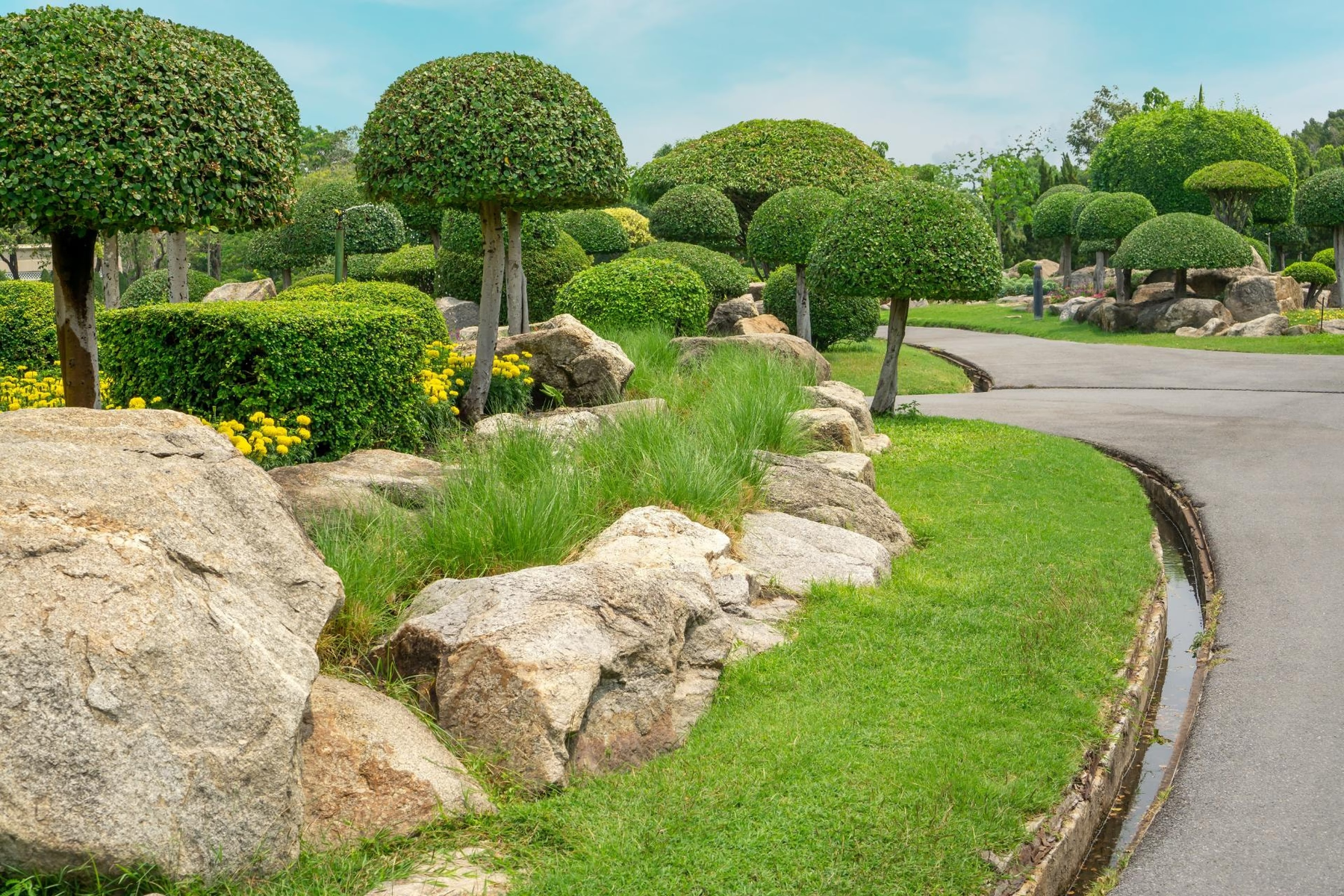
Cloud pruning comes from the Japanese garden tradition. The gardener thins a tree or shrub down to a set of chosen limbs, then clips the foliage at the ends into rounded pads that look like clouds floating on the branches. Pines, junipers and small-leaved hollies are classic subjects.
The style is detailed handwork, done at least once a year and sometimes more. One important caution applies to pines and junipers: they won't sprout from bare wood, so every pad has to keep some green foliage. Trying to convert an overgrown juniper into cloud form by cutting deep into bare branches usually leaves dead stubs.
Classic Topiary
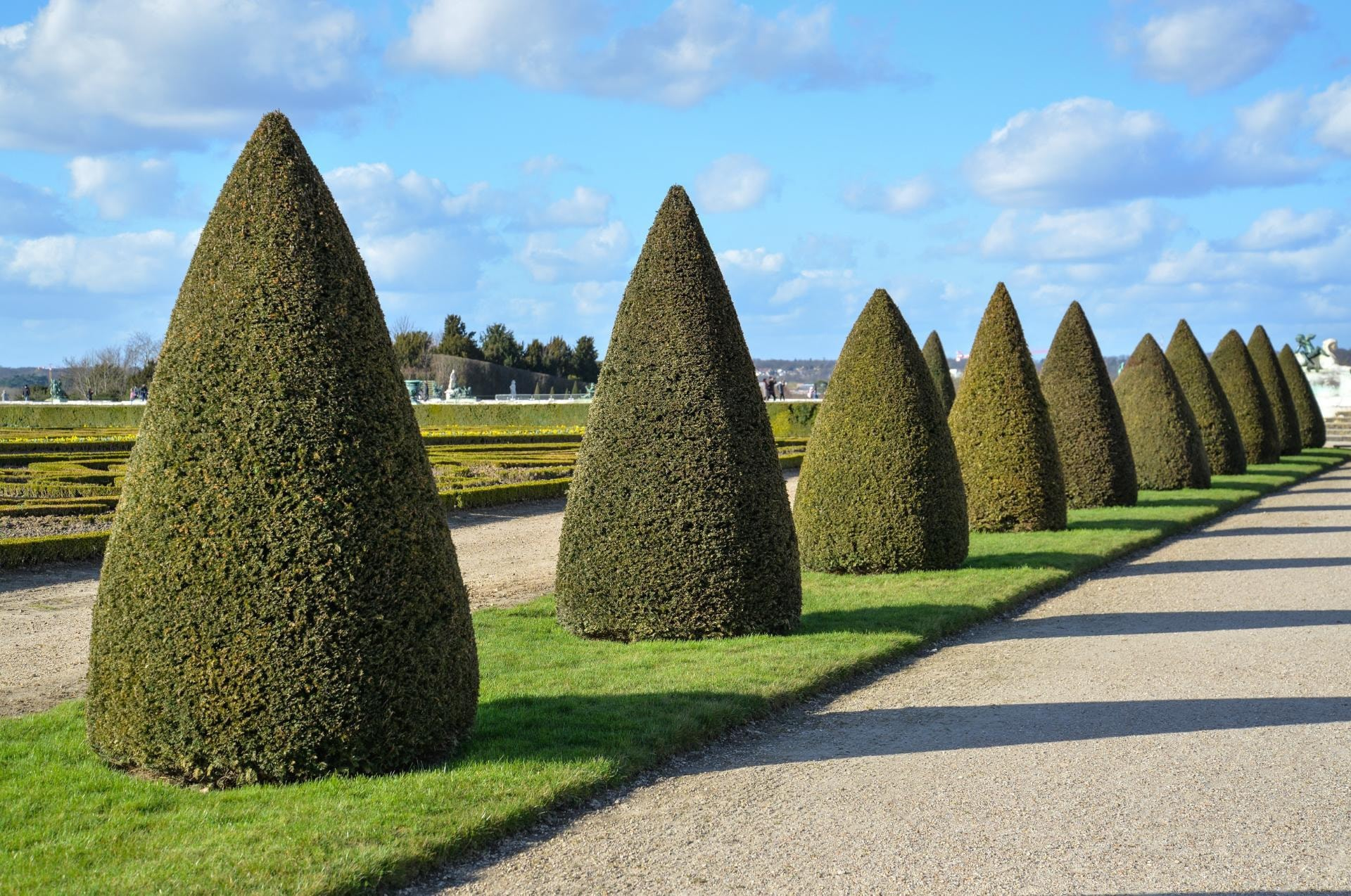
Topiary is the centuries-old art of clipping dense shrubs into geometric forms such as balls, cones, cubes and spirals, or into figures like animals. Boxwood, yew and privet are the standard plants because they tolerate constant shearing and sprout readily from older wood.
Topiary needs frequent light clipping through the growing season, and a complex figure takes years to build. Simple geometric shapes are far easier to keep up than detailed figures. Our post on keeping hedges, screens and topiary healthy covers the everyday care that keeps clipped shapes full.
How Modern Tree Care Changed Shaping
The traditional styles haven't changed much, but the understanding behind them has. Modern arboriculture has shifted how any shaping job is carried out:
- Cut placement: cuts go just outside the branch collar, where the tree can seal the wound, instead of flush against the trunk as was once common.
- No wound paint: sealing cuts with paint or tar is generally unnecessary and can trap moisture.
- Smaller, more frequent cuts: removing modest amounts on a regular schedule is easier on a tree than occasional heavy cutting.
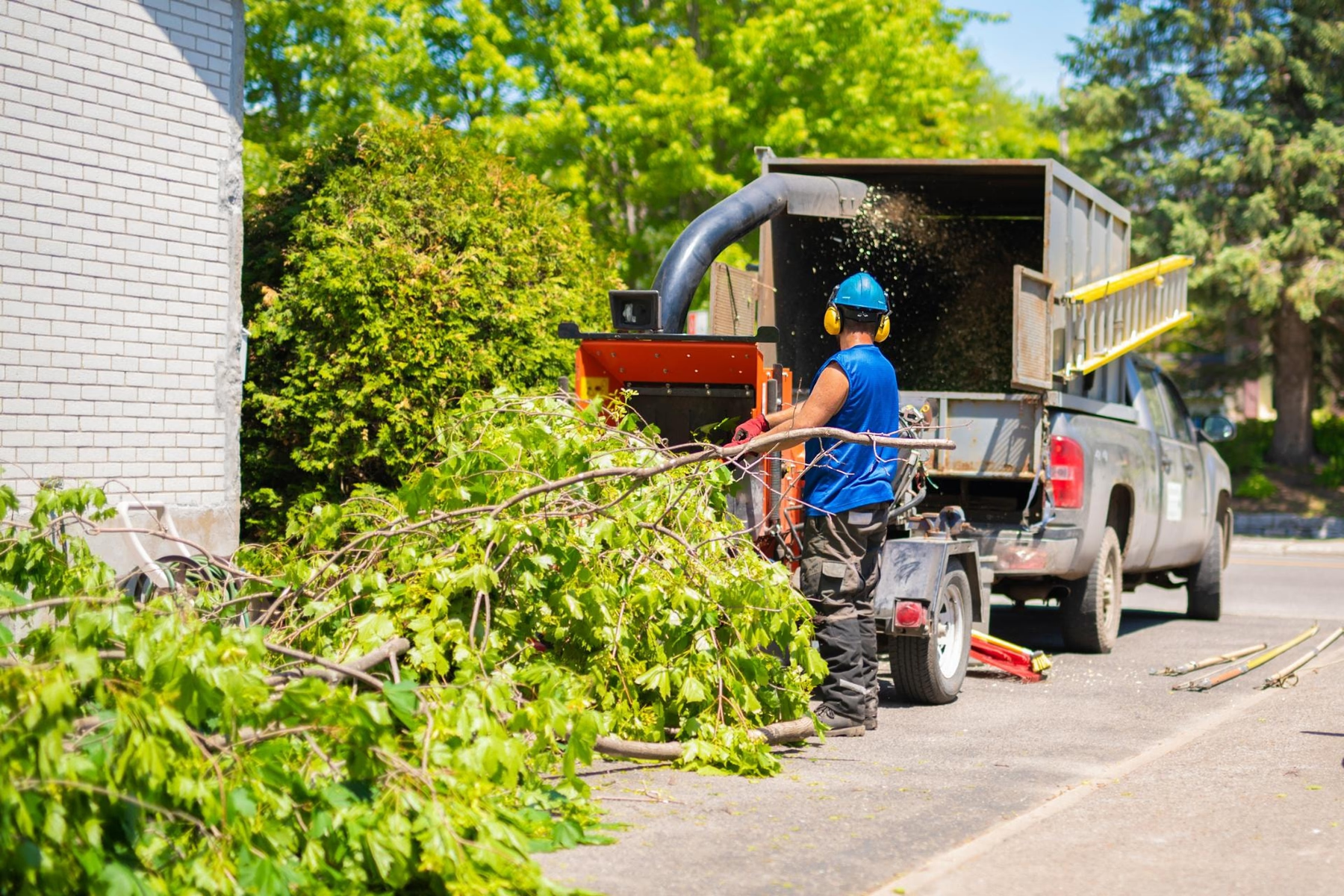
- Reaching the canopy safely: bucket trucks and cranes let crews reach high branches without climbing spikes, which wound the trunk of a tree that is being kept.
- Natural form first: for most trees, the goal today is a healthy natural shape, with formal styles reserved for plants chosen and trained for them from the start.
You can read more about the cuts that make any style work on our tree pruning page.
Which Styles Suit a Sacramento Yard
All five styles can work here, but some fit an ordinary yard much better than others.
- Espalier is one of the most practical. It fits narrow side yards and fences, and fruit trees do well in the valley. Be careful with south- and west-facing walls, which reflect intense summer heat. An east-facing wall or a freestanding trellis is easier on the plant.
- Simple topiary such as globes and cones is easy to add to a front yard and manageable with regular clipping.
- Cloud pruning works well on one or two feature shrubs, especially in a Japanese-style garden, if you're willing to commit to the handwork.
- Pollarding suits a tree you want kept at a fixed size for the long haul, but only if it's started young and maintained on schedule. It isn't a way to fix an overgrown mature tree.
- Pleaching is the least common choice for a typical lot. It needs space, a strong framework and years of training.
Before committing to any of them, ask yourself three things: will you keep up with the clipping or pay for it every year, do you have the right plant or are you willing to start with a young one, and does the spot get the sun and water that plant needs? Most yards are best served by natural-form shaping for their trees and a formal style or two for accent plants. You can read more about our approach on the tree shaping page.
Start a Shaping Project
If one of these styles appeals to you, Environmental Tree Service can help you decide whether it fits your yard. Call (916) 870-8154 or contact us for a free estimate.